MemoHoney Official Website › Articles › Directions and timing
Directions and timingBefore a Meal Is a Direction, Not a Promise of a Result
MemoHoney's before-a-meal line is a suggested product routine. It does not predict a personal result, replace a medicine review or create a clinical timeline.
Before a meal is a label direction
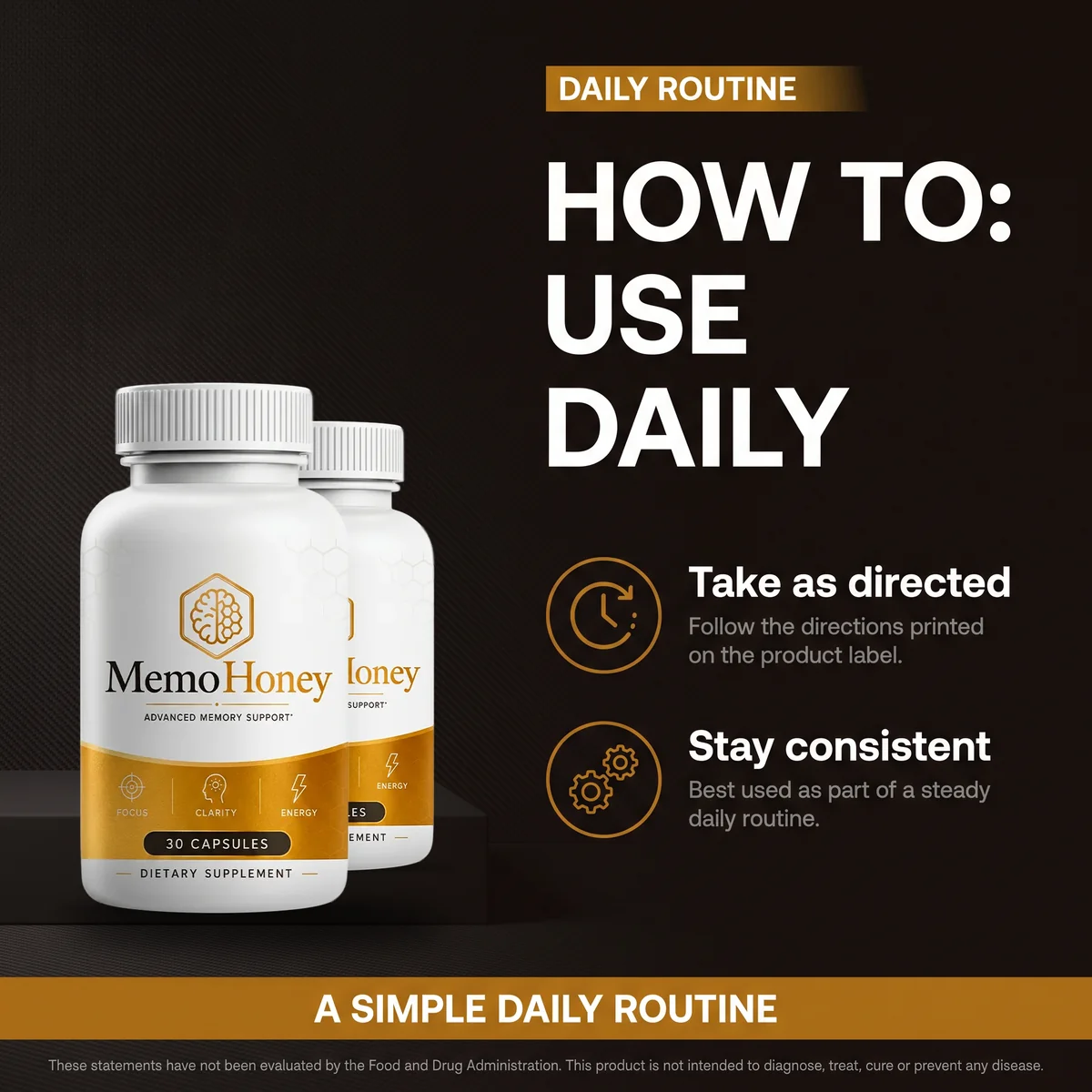
The MemoHoney bottle-wrap direction says to take one capsule daily with an 8 oz glass of water, for best results 20 to 30 minutes before a meal, or as directed by a healthcare professional. This is an instruction for routine use. It tells a buyer when the seller suggests taking the product. It does not, by itself, say that an effect begins twenty minutes later or that a missed timing window makes the capsule ineffective.
The phrase for best results is common product-direction language. It is not a substitute for a study of this formula's timing. The supplied record does not show a clinical trial comparing this exact seven-line formula before food, after food or at another time of day. A buyer can follow a label direction without turning the direction into evidence that a specific outcome has been measured.
The 8 oz water instruction is similarly practical. It describes the way the product is meant to be taken. It does not identify a mechanism for memory, explain the amount of any ingredient, or answer whether the routine is appropriate for a reader taking medicines or managing a condition.
| Label statement | What it can tell a buyer | What it cannot tell a buyer alone |
|---|---|---|
| One capsule daily | The suggested serving routine | A personal outcome timeline |
| 8 oz water | How the label says to take it | A mechanism or clinical result |
| 20–30 minutes before a meal | Suggested timing | That the formula matches a study regimen |
| As directed by a healthcare professional | The general direction has individual limits | That a bottle replaces individual advice |
A direction can be followed as written while remaining a product instruction rather than evidence of safety, effectiveness or a specific time to expect change.
A routine can be useful without being a treatment
A once-daily instruction may be easy for a buyer to remember. Linking a capsule to breakfast or another regular event can make a routine more consistent. That is a behavioural convenience. It should not be confused with a promise that a habit is treating a condition or that a product is a substitute for sleep, medication review, hearing care or assessment of a new decline.
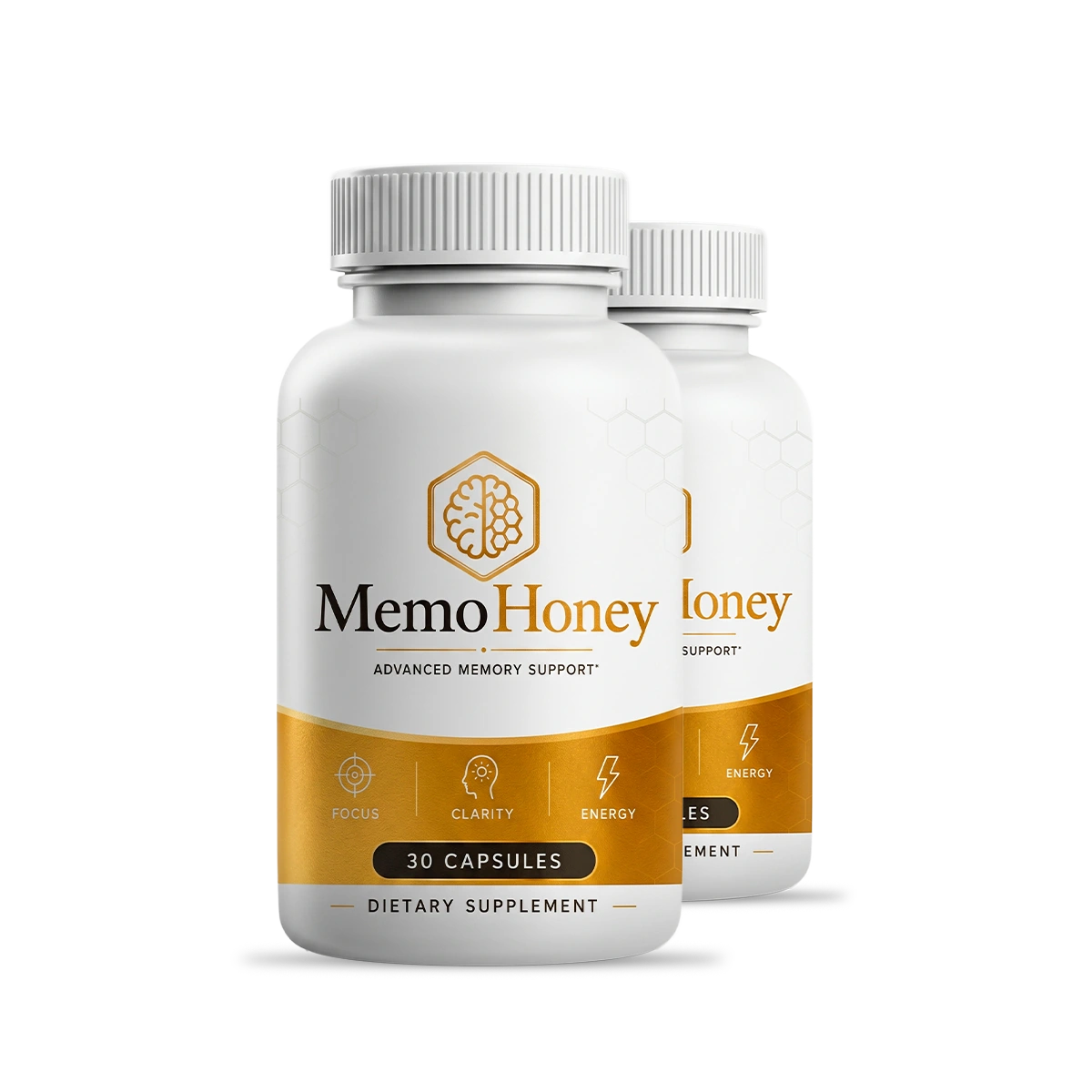
The bottle contains 30 capsules and the direction is one daily, so a bottle is a 30-day routine. That calendar information is concrete. It says nothing about how long an individual should wait for a cognitive change, and it does not make a seller's guarantee window into a clinical timeline.
Someone can value the simplicity of a routine while keeping their expectations honest. The actual panel provides ingredient quantities; research provides different doses and populations; a clinician or pharmacist provides individual advice. The time printed on a bottle should stay in the category of product instructions.
The direction does not answer every food or medicine question
Taking a supplement before food may raise practical questions for a buyer, especially when they have a sensitive stomach, use prescription medicines or follow a structured eating plan. The label can give its suggested routine, but it cannot account for every individual circumstance. The phrase or as directed by your healthcare professional acknowledges that a general instruction may not be the final word for a particular person.
This product lists L-Arginine, L-Arginine AKG, two forms of L-Citrulline, Niacin, Beta Alanine and Calcium. Anyone concerned about interactions, blood pressure, adverse effects or timing alongside another medicine should bring the complete panel to a pharmacist or prescriber. The marketing label cannot see the medicine list a clinician needs to review.
This is not a reason to ignore the label. It is a reason to understand its scope. The direction provides a default product routine. A health professional provides context when the buyer's medicines, symptoms or conditions make a default routine insufficient.
Timing language is not evidence for a research match
Published studies on the product's individual amino-acid ingredients used specific quantities, schedules and study populations. The full panel makes the product amounts visible, which is helpful. It does not establish that taking the mixture twenty to thirty minutes before a meal recreates the regimen, dose or outcome of an individual study.
For example, the amino-acid lines are disclosed in milligrams while many cited studies used grams of one compound at a time. A timing phrase cannot bridge that numerical difference. The appropriate comparison is literal: product ingredient, product amount, study ingredient, study amount, study population and measured outcome.
The ingredients page makes that comparison directly. This article has the narrower task of preventing the timing line from becoming a shortcut for claims the available evidence does not support. A direction tells a buyer how to take the product; it does not turn a mixed capsule into the precise intervention a study examined.
The daily direction and the refund terms are separate dates
One daily capsule means a 30-capsule bottle lasts 30 days. The seller's stated money-back period is 60 days from purchase. These facts are useful for product and service planning. They do not say that a person must wait a certain number of days to seek care, and they do not promise that a particular experience should occur before the window closes.
The purchase date starts the stated service clock before delivery and before the first dose. A buyer should save the confirmation, note the relevant dates, and retain current instructions if a return question arises. A returned parcel, service processing and card posting are separate events that should not be confused with the daily routine itself.
The guarantee page and how-to-use page give two different types of information. One describes stated service terms; the other describes the product direction. Reading them together helps a buyer plan without making either page into medical or outcome evidence.

A timing instruction must not delay appropriate care
A person who notices sudden confusion, worsening recall, a reaction or an alarming change should not wait for a bottle routine to reach a particular day. Those concerns deserve appropriate assessment. A dietary supplement page can provide label information and contact routes, but it cannot determine what is causing a symptom or whether continuing is appropriate.
The same principle applies to possible interactions. Anyone taking nitrates, blood-pressure medicines, blood thinners or PDE5 inhibitors should not rely on a generic before-meal line to decide compatibility. The full panel should be reviewed with a pharmacist or prescriber who can consider the person, not merely the product's advertising copy.
The narrow value of the direction is therefore clear: it supports a routine for a buyer who has decided the product is appropriate. It does not replace a decision about safety, does not predict a cognitive result and does not make a service timetable into a health timetable.
Read the MemoHoney panel and terms before ordering
The printed serving, named panel lines, daily direction, and the specific questions the product record cannot answer.
Two bottles $158 · six bottles $294 · 60 days from purchase to change your mind
Order MemoHoney From This DeskLot MEM-26/ME-4830 · 30 capsules a bottle · dispatched inside the United States
What this record can support
The front label, the Supplement Facts panel, an ingredient-tile graphic, a seller description, an order record and an individual research paper are different records. The label can identify the claim printed on the bottle. The panel can identify a serving and listed quantities. A seller description can state what it chooses to emphasize. A study can report the amount, people and outcome it examined. They should not be asked to become each other.
That means an incomplete answer can remain incomplete. A panel amount does not establish that the amount will create a result. A marketing ingredient list does not erase the panel line it left out. A timing instruction does not predict an effect. If the question that matters to a buyer is not answered by the available record, not buying is a careful outcome rather than a failure to interpret marketing optimistically.
After a purchase, the same separation helps keep questions in the right place. The product and order records can support a service question. The complete label can be taken to a pharmacist or clinician when medicines, reactions, a condition or a change in memory are relevant. Customer service and a product page are not a substitute for individual medical assessment.
The useful habit is simple: identify which record has the exact fact, preserve it, ask the next precise question, and do not borrow certainty from an adjacent piece of packaging. That keeps the product information readable without allowing the strongest-looking surface to silently fill every gap.
- Use the Supplement Facts panel for the product's listed serving and amounts.
- Use seller copy and tiles for what they literally say, not for omitted facts.
- Use a direction as a routine instruction, not as a personal outcome timeline.
- Use an order ID and current instruction for a service issue.
- Use a pharmacist or clinician for medicine and health questions.
What follows is about a supplement, not about a treatment, and it is not advice from anybody qualified to give you any. If your recall has shifted enough that you or somebody close to you has remarked on it, book the appointment rather than the bottle: MedlinePlus lists what a clinician will want to hear about.
- Questions and Answers on Dietary Supplements. U.S. Food and Drug Administration. https://www.fda.gov/food/information-consumers-using-dietary-supplements/questions-and-answers-dietary-supplements
- Using Dietary Supplements Wisely. National Center for Complementary and Integrative Health, National Institutes of Health. https://www.nccih.nih.gov/health/using-dietary-supplements-wisely
- Memory. MedlinePlus, U.S. National Library of Medicine. https://medlineplus.gov/memory.html
- Dolan E, Swinton PA, Painelli VS, et al. A Systematic Risk Assessment and Meta-Analysis on the Use of Oral β-Alanine Supplementation. Adv Nutr. 2019;10(3):452-463. PMID 30980076. https://pubmed.ncbi.nlm.nih.gov/30980076/
- Khalaf D, Krüger M, Wehland M, et al. The Effects of Oral l-Arginine and l-Citrulline Supplementation on Blood Pressure. Nutrients. 2019;11(7):1679. PMID 31336573. https://pubmed.ncbi.nlm.nih.gov/31336573/