MemoHoney Official Website › Ingredients
IngredientsMemoHoney Ingredients: seven amounts, and what each was tested at
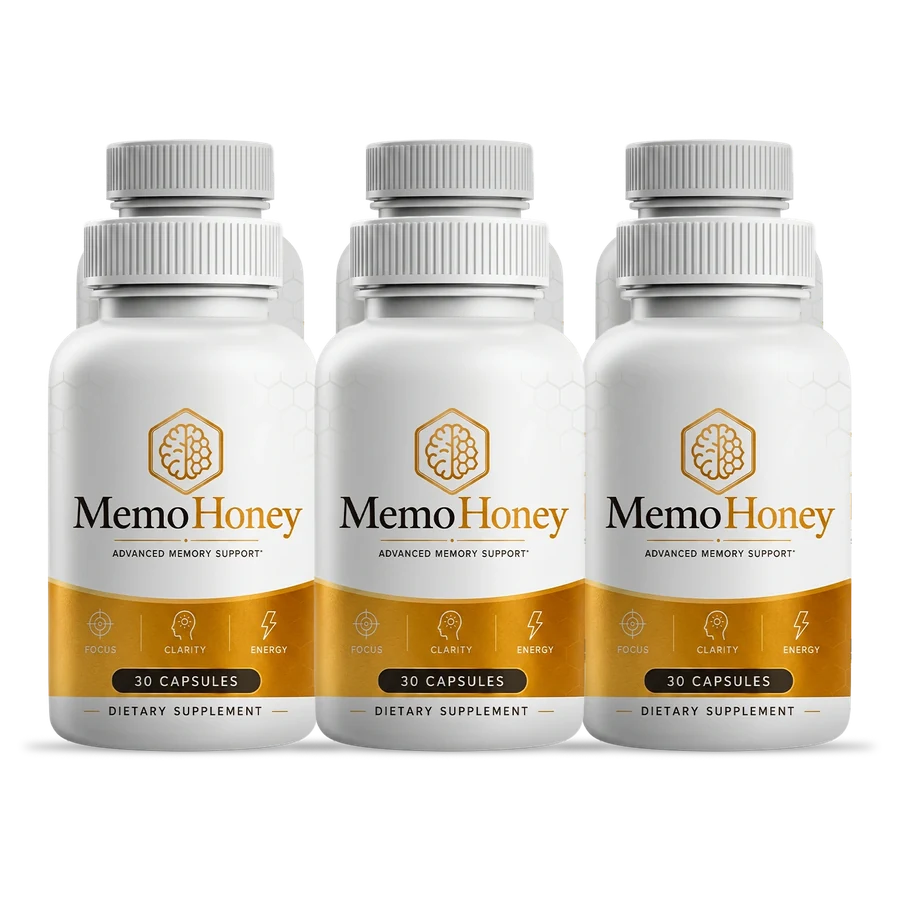
The Supplement Facts panel lists seven per capsule: niacin 7.5 mg NE, calcium 18 mg, L-arginine 200 mg, L-arginine AKG 2:1 200 mg, L-citrulline HCl 100 mg, L-citrulline malate 100 mg and beta-alanine 40 mg. The seller's advertising names six of them and leaves out the calcium. This page sets each amount beside the one its own published trials used.
The panel as printed, then one card per ingredient: what the molecule is, which research field studied it, and how much that research gave people.
The MemoHoney Supplement Facts panel, as printed
| Line on the panel | Per capsule | % Daily Value |
|---|---|---|
| Niacin | 7.5 mg NE | 47% |
| Calcium (as Calcium Carbonate) | 18 mg | 1.5% |
| L-Arginine (base) | 200 mg | not established |
| L-Arginine AKG 2:1 Extract | 200 mg | not established |
| L-Citrulline HCl | 100 mg | not established |
| L-Citrulline Malate | 100 mg | not established |
| Beta Alanine | 40 mg | not established |
Serving size one capsule, thirty servings a bottle. Read off the bottle wrap on the seller's own page, 21 September 2026.
Other ingredients: hypromellose (vegetable capsule), vegetable stearate, silicon dioxide. The shell is a vegetable capsule, and the other two are the ordinary flow agents that keep a powder running through a filling machine.
Two things about that panel are worth more than a glance. It is complete: every ingredient has its own amount and nothing hides inside a proprietary blend. And it is one line longer than the advertising. The seller's ingredient section describes six ingredients; the panel adds 18 mg of calcium as calcium carbonate, which it never mentions.
The seven ingredients on the MemoHoney panel
Each card gives the molecule, the amount on the label, the trial amount and the outcome measured, so the claim and the evidence can be read in one place.
L-Arginine
amino acid200 mg on the label; trials use gramsThe starting material. Nitric oxide synthase takes arginine and produces nitric oxide, the short-lived gas that tells the smooth muscle around a blood vessel to relax. That much is settled biochemistry and it is the reason arginine appears in a formula sold for blood flow.
Swallowing it is the difficulty. A stable-isotope study followed labelled dietary arginine through healthy adults and found most of it consumed by urea synthesis and gut metabolism before it could reach the systemic circulation (a stable-isotope study of dietary arginine). The practical answer the field settled on was not more arginine but a different molecule, which is why two citrulline forms sit on this same label.
A 2019 review of oral arginine and citrulline in blood pressure is the nearest thing to a clinical summary (a 2019 review of oral arginine and citrulline), and it deals with blood pressure rather than with recall. The panel lists 200 mg of arginine base.
L-Arginine AKG 2:1 Extract
amino acid salt200 mg on the label; 12 g in the trialTwo parts arginine bound to one part alpha-ketoglutarate. The commercial argument is that the salt survives digestion better than free arginine; the published record is a pre-workout record rather than a cognitive one.
The pharmacokinetic trial that is usually cited for it gave 4 g three times a day, 12 g in total, and measured what appeared in plasma (the arginine AKG pharmacokinetic trial). A separate trial gave 3,000 mg before a single training session and reported nothing measurable (an acute arginine AKG trial). A third gave 12 g a day for a week and looked at blood flow (a seven-day arginine AKG trial).
Twelve grams is the figure to keep in mind while reading the rest of this page, and the panel's 200 mg is one sixtieth of it. That is not an argument that the ingredient does nothing. It is the scale at which somebody went looking.
L-Citrulline HCL
amino acid salt100 mg on the label; 8.8 g in the trialCitrulline is the answer the field found to the arginine problem. It passes the gut and the liver largely intact and is converted to arginine in the kidney, so a gram of citrulline raises plasma arginine more reliably than a gram of arginine does (a human citrulline availability study). A 2026 rat pharmacokinetic study characterises the same conversion in detail (a 2026 rat pharmacokinetic model).
The one trial that measured blood flow to the brain gave 8.8 g a day for five days to athletes doing sprint interval training, and reported changes in cerebral oxygenation during the work (the citrulline cerebrovascular trial). That is the closest the citrulline literature comes to this product's use case, and it is still a long way from a person at a desk taking the 100 mg this panel lists.
A separate trial in older adults used citrulline alongside exercise (a review of citrulline in older adults), and a 2025 meta-analysis covers the blood pressure question (a 2025 meta-analysis of citrulline and blood pressure).
L-Citrulline Malate
amino acid salt100 mg on the label; 8 g in the trialThe same citrulline joined to malic acid, and the form most of the sports literature actually uses. A 2024 and a 2026 trial define its current evidence: three days of 8 g a day improved repeated sprint running in male team-sport athletes (a three-day citrulline malate trial), and a dose-comparison pilot set 8 g against 12 g acutely in resistance exercise (a moderate-versus-high-dose citrulline malate trial).
An older-adult trial used 3 g a day for six weeks alongside training (a citrulline malate trial in older women), which is the smallest amount anywhere in this ingredient's record and still thirty times the 100 mg on this panel.
Nothing in that set measured memory, recall or attention. It measured sprints, lifts and function in the legs.
Niacin (Vitamin B3)
vitamin7.5 mg NE on the label, 47% DVThe one ingredient on this label at a nutritional amount: 7.5 mg NE, 47% of the Daily Value. Niacin becomes NAD and NADP, the two coenzymes that move electrons through energy metabolism, and severe deficiency causes pellagra, whose three classical symptoms end in dementia.
That last fact is where the cognitive argument comes from, and it needs handling carefully: correcting a deficiency is not the same as improving a brain that is not deficient. The observational evidence is a large dietary cohort in which higher niacin intake tracked with lower Alzheimer risk (the Chicago Health and Aging Project analysis), and an observational cohort is not a trial.
The amounts are worth knowing in both directions. The US tolerable upper intake level is 35 mg a day (the 2017 niacin upper-intake review); high-dose niacin as a cardiovascular drug was tested at gram scale and the large trial of it was stopped for harm rather than benefit (the HPS2-THRIVE trial), which is a different substance at a different dose and a good reason not to add over-the-counter niacin on top of a capsule (a survey of over-the-counter niacin products).
Beta-Alanine
amino acid40 mg on the label; 2.4 g in the trialCarnosine is a dipeptide that buffers acid inside muscle, and beta-alanine is the half of it the body runs short of. Carnosine is also present in brain tissue, which is the thread this ingredient hangs on.
The interesting study is small and genuinely about the brain: 2.4 g a day in adults aged 60 to 80, with imaging of the hippocampus as the outcome (the beta-alanine brain-imaging trial). Against that sits the sports meta-analysis, where 3.2 to 6.4 g a day produced a pooled effect size of 0.18 (the 2017 beta-alanine meta-analysis), and a safety review of chronic supplementation (the beta-alanine risk assessment). A military cognitive trial used it under stress (an evidence review for military use), and a trial of carnosine itself in older adults used 2 g a day (the NEAT carnosine trial).
The tingling people report on beta-alanine, paraesthesia, is harmless and dose-related. At the 40 mg this panel lists it is very unlikely, and its absence is not evidence of anything.
Calcium (as calcium carbonate)
mineral18 mg on the label, 1.5% DVThe seventh line, and the one the seller's advertising never mentions. Calcium carbonate is one of the usual forms of calcium in supplements, and at 18 mg it is one and a half percent of the Daily Value: a trace, not a dose of anything.
It earns a card for one reason. Somebody adding up calcium across several products, or told to keep calcium away from a particular medicine, is entitled to know it is in the capsule, and only the panel says so.
The MemoHoney label amounts beside the research
This is the section whose job is the gap, and it is the only place on this page the gap is spelled out.
Every figure in the middle column below is the panel's own. Every figure in the right-hand column is a published one, and each amino-acid line carries the ratio between the two. The ratios run from sixty to eighty-eight for the headline trial of each ingredient, and niacin is the one line where the capsule and the nutritional literature talk in the same units.
The panel quoted here is the one the seller's own page shows. When the parcel lands, turn a bottle round and compare the Supplement Facts box line for line. If anything differs, ring +1 (302) 200-3480 with lot MEM-26/ME-4830 in front of you, and tell this website so the page can be corrected.
How the seven MemoHoney ingredients group together
| Group | Which names | What the group is for in the research |
|---|---|---|
| Nitric oxide precursors | L-Arginine and L-Arginine AKG 2:1 (200 mg each), L-Citrulline HCl and L-Citrulline Malate (100 mg each) | Four of the seven do one job between them: raise plasma arginine so more nitric oxide can be made. The citrulline pair is the part of that group with the better absorption story. |
| Carnosine precursor | Beta-Alanine, 40 mg | Acid buffering inside muscle, plus one small imaging study in the brain in older adults. |
| Vitamin | Niacin, 7.5 mg NE | Energy metabolism through NAD. The only name here whose meaningful dose is measured in milligrams. |
| Mineral | Calcium as calcium carbonate, 18 mg | Not part of the advertised formula at all, and a trace at 1.5% of the Daily Value. |
Grouping by what the research studied, not by an order of importance.
Grouped that way the formula reads more simply than a list of seven does. It is a blood-flow formula with a B vitamin and one buffering amino acid attached, and four of its seven lines, 600 of its 640 mg of amino acids, are variations on a single idea.
Whether that is a strength depends on what you wanted. Four routes to one mechanism is a reasonable design if the mechanism is the point. It is a thinner formula than six independent ingredients would be, and nobody reading the tile graphic would guess that without being told.
What is not in MemoHoney
Worth stating plainly, because the category has habits. There is no caffeine on this label and nothing that would be expected to act inside an hour. There is no ginkgo, no bacopa, no huperzine and no phosphatidylserine, which are the four botanicals a memory formula usually reaches for. There is no proprietary blend either: the panel gives every ingredient its own amount.
Ginkgo is worth a sentence because it is the comparison people make. The large randomised prevention trial of ginkgo in older adults did not reduce dementia incidence (the Ginkgo Evaluation of Memory study), at 120 mg twice a day for years. Its absence here is not a defect.
There is no gelatin: the panel names the shell as hypromellose, a vegetable capsule, which is the one emblem claim the label itself backs. The testing and quality page goes through the rest of the emblems and what each one is a statement about.
Sources behind the MemoHoney ingredient pages
- Mariotti F, Petzke KJ, Bonnet D, et al. Kinetics of the utilization of dietary arginine for nitric oxide and urea synthesis: insight into the arginine-nitric oxide metabolic system in humans. Am J Clin Nutr. 2013;97(5):972-9. PMID 23535108. https://pubmed.ncbi.nlm.nih.gov/23535108/
- Khalaf D, Krüger M, Wehland M, et al. The Effects of Oral l-Arginine and l-Citrulline Supplementation on Blood Pressure. Nutrients. 2019;11(7):1679. PMID 31336573. https://pubmed.ncbi.nlm.nih.gov/31336573/
- Campbell B, Roberts M, Kerksick C, et al. Pharmacokinetics, safety, and effects on exercise performance of L-arginine alpha-ketoglutarate in trained adult men. Nutrition. 2006;22(9):872-81. PMID 16928472. https://pubmed.ncbi.nlm.nih.gov/16928472/
- Wax B, Kavazis AN, Webb HE, et al. Acute L-arginine alpha ketoglutarate supplementation fails to improve muscular performance in resistance trained and untrained men. J Int Soc Sports Nutr. 2012;9(1):17. PMID 22510253. https://pubmed.ncbi.nlm.nih.gov/22510253/
- Willoughby DS, Boucher T, Reid J, et al. Effects of 7 days of arginine-alpha-ketoglutarate supplementation on blood flow, plasma L-arginine, nitric oxide metabolites, and asymmetric dimethyl arginine after resistance exercise. Int J Sport Nutr Exerc Metab. 2011;21(4):291-9. PMID 21813912. https://pubmed.ncbi.nlm.nih.gov/21813912/
- Li A, Li H, Chen J. The effects of L-citrulline supplementation on cerebrovascular function during sprint interval training in taekwondo athletes. J Exerc Sci Fit. 2025;23(3):222-228. PMID 40474881. https://pubmed.ncbi.nlm.nih.gov/40474881/
- Rougé C, Des Robert C, Robins A, et al. Manipulation of citrulline availability in humans. Am J Physiol Gastrointest Liver Physiol. 2007;293(5):G1061-7. PMID 17901164. https://pubmed.ncbi.nlm.nih.gov/17901164/
- Figueroa A, Jaime SJ, Morita M, et al. L-Citrulline Supports Vascular and Muscular Benefits of Exercise Training in Older Adults. Exerc Sport Sci Rev. 2020;48(3):133-139. PMID 32568925. https://pubmed.ncbi.nlm.nih.gov/32568925/
- Luo P, Chen J, Liu K, et al. Does l-citrulline supplementation and watermelon intake reduce blood pressure in middle-aged and older adults? A systematic review and meta-analysis of randomized controlled trials. Clin Nutr ESPEN. 2025;69:653-664. PMID 40789388. https://pubmed.ncbi.nlm.nih.gov/40789388/
- Song S, Thapa SK, Upadhyay M, et al. Quantitative characterization of L-citrulline as a precursor of L-arginine in rats: pharmacokinetic basis for nitric oxide-mediated effects. Front Pharmacol. 2026;17:1889835. PMID 42755674. https://pubmed.ncbi.nlm.nih.gov/42755674/
- Faria VS, Egan B. Effects of 3 days of citrulline malate supplementation on short-duration repeated sprint running performance in male team sport athletes. Eur J Sport Sci. 2024;24(6):758-765. PMID 38874989. https://pubmed.ncbi.nlm.nih.gov/38874989/
- Gough LA, Tan R, Bailey SJ, et al. The Comparative Effect of Acute Moderate- and High-Dose Citrulline Malate on Resistance Exercise Performance in Trained Individuals: A Double-Blind Randomised Controlled Pilot Trial. J Funct Morphol Kinesiol. 2026;11(1). PMID 41900522. https://pubmed.ncbi.nlm.nih.gov/41900522/
- Ramos-Hernández R, Pascual-Fernández J, Álvarez-Pardo S, et al. Short-term citrulline malate supplementation enhances lower-limb function in physically active older women: A pilot randomized controlled trial. Clin Nutr ESPEN. 2026;74:103356. PMID 42162613. https://pubmed.ncbi.nlm.nih.gov/42162613/
- Morris MC, Evans DA, Bienias JL, et al. Dietary niacin and the risk of incident Alzheimer's disease and of cognitive decline. J Neurol Neurosurg Psychiatry. 2004;75(8):1093-9. PMID 15258207. https://pubmed.ncbi.nlm.nih.gov/15258207/
- Minto C, Vecchio MG, Lamprecht M, et al. Definition of a tolerable upper intake level of niacin: a systematic review and meta-analysis of the dose-dependent effects of nicotinamide and nicotinic acid supplementation. Nutr Rev. 2017;75(6):471-490. PMID 28541582. https://pubmed.ncbi.nlm.nih.gov/28541582/
- Landray MJ, Haynes R, Hopewell JC, et al. Effects of extended-release niacin with laropiprant in high-risk patients. N Engl J Med. 2014;371(3):203-12. PMID 25014686. https://pubmed.ncbi.nlm.nih.gov/25014686/
- Meyers CD, Carr MC, Park S, et al. Varying cost and free nicotinic acid content in over-the-counter niacin preparations for dyslipidemia. Ann Intern Med. 2003;139(12):996-1002. PMID 14678919. https://pubmed.ncbi.nlm.nih.gov/14678919/
- Ostfeld I, Zamir A, Ben-Zeev T, et al. β-Alanine supplementation improves fractional anisotropy scores in the hippocampus and amygdala in 60-80-year-old men and women. Exp Gerontol. 2024;194:112513. PMID 38971131. https://pubmed.ncbi.nlm.nih.gov/38971131/
- Saunders B, Elliott-Sale K, Artioli GG, et al. β-alanine supplementation to improve exercise capacity and performance: a systematic review and meta-analysis. Br J Sports Med. 2017;51(8):658-669. PMID 27797728. https://pubmed.ncbi.nlm.nih.gov/27797728/
- Dolan E, Swinton PA, Painelli VS, et al. A Systematic Risk Assessment and Meta-Analysis on the Use of Oral β-Alanine Supplementation. Adv Nutr. 2019;10(3):452-463. PMID 30980076. https://pubmed.ncbi.nlm.nih.gov/30980076/
- Ko R, Low Dog T, Gorecki DK, et al. Evidence-based evaluation of potential benefits and safety of beta-alanine supplementation for military personnel. Nutr Rev. 2014;72(3):217-25. PMID 24697258. https://pubmed.ncbi.nlm.nih.gov/24697258/
- O'Toole TE, Amraotkar AR, Gao H, et al. Carnosine supplementation improves cognitive outcomes in younger participants of the NEAT trial. Neurotherapeutics. 2025;22(2):e00541. PMID 39919936. https://pubmed.ncbi.nlm.nih.gov/39919936/
- DeKosky ST, Williamson JD, Fitzpatrick AL, et al. Ginkgo biloba for prevention of dementia: a randomized controlled trial. JAMA. 2008;300(19):2253-62. PMID 19017911. https://pubmed.ncbi.nlm.nih.gov/19017911/
Order MemoHoney with every amount on the label
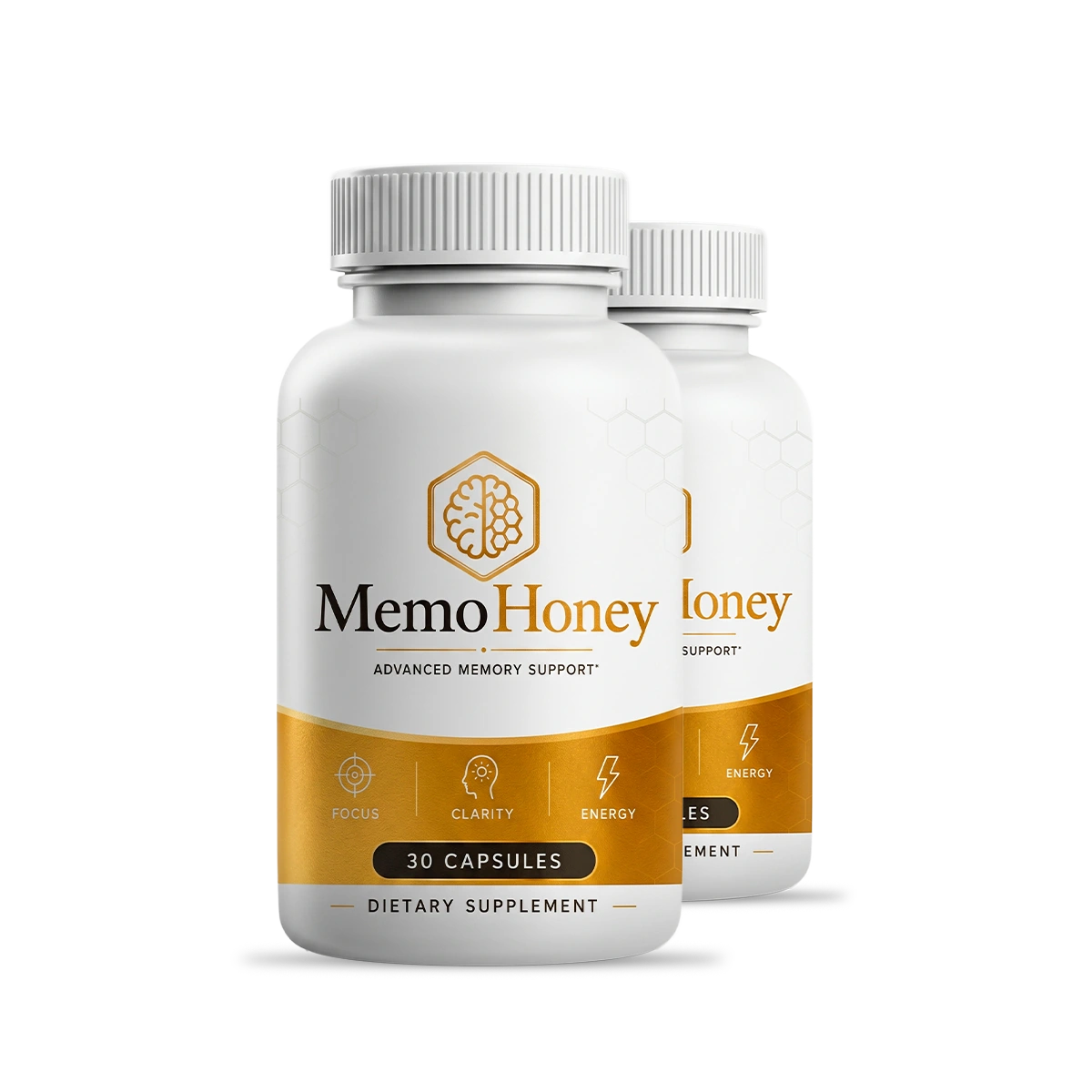
The panel prints all seven and this page sets each beside what its trials used. Compare the bottle that arrives with the panel above, and use the 60-day window if the capsule does not suit you.
Two bottles $158 · six bottles $294 · 60 days from purchase to change your mind
Order MemoHoney From This DeskLot MEM-26/ME-4830 · 30 capsules a bottle · dispatched inside the United States