MemoHoney Official Website › Articles › Method
MethodHow to run a six-week test on yourself
You are both the experiment and the instrument, which is an unfavourable arrangement and the only one available. Five rules make the answer at the end worth more: choose the measure first, change one thing, keep the streak, record day one, and decide before the window closes.
What follows is about a supplement, not about a treatment, and it is not advice from anybody qualified to give you any. If your recall has shifted enough that you or somebody close to you has remarked on it, book the appointment rather than the bottle: MedlinePlus lists what a clinician will want to hear about.
The problem with testing something on yourself
You are both the experiment and the instrument. You paid for the bottle, you remember hoping it would work, and the thing being measured is the same faculty you are using to measure it. Almost nothing about that arrangement is favourable.
It is still the only test available. No trial of this capsule exists on any outcome, the distributor's figures are its own summary of its own sales, and the 60-day window from the date of purchase gives you roughly two months to reach a view.
A few precautions make the answer at the end of it worth considerably more than it otherwise would be. None of them is difficult and all of them are decided before you start.
Rule one: pick the measure before you start
A measure chosen afterwards will be whichever one moved. Choose it on day zero, write it down, and do not change it.
It should have a number in it. Feelings drift towards whatever you expected, and after six weeks nobody can remember accurately how sharp they felt in week one, which is precisely the faculty under test.
Good candidates are things you already do regularly and already half-measure.
- How long the crossword or the puzzle takes, timed, on the same day of the week.
- How many of the three things you meant to do before lunch actually got done.
- How often you walk into a room and have to reconstruct why.
- Whether you finish a chapter without rereading the last paragraph.
- How many times in a week you reach for a name and it is not there.
Pick one. Two is acceptable. Five is a fishing expedition, and with five measures at least one of them will move in a promising direction by chance.
Rule two: change one thing at a time
This is the rule most self-experiments break, and it is the one that makes the result uninterpretable rather than merely noisy.
Starting a capsule in the same fortnight as a new sleep routine, a new exercise habit or a new job produces an answer about the fortnight rather than about the capsule. Sleep in particular has a substantial literature on memory consolidation (a 2026 review of sleep and memory consolidation), so it is the one confounder most likely to be doing the work.
If something else in your life is about to change, wait. The window runs from the date of purchase, so the sensible order is to decide when you can run a clean six weeks and buy then.
Rule three: the streak is the experiment
The distributor's quoted wait is 3–6 weeks. Somebody taking the capsule four mornings in seven has not run that test, whatever the calendar says.
One capsule, one time of day, next to whatever you already do every morning without thinking. The how to use page covers missed mornings, which cost very little individually and a great deal as a pattern.
Write the start date on the bottle. It answers how long you have really been taking it and how much of the window is left, and it takes one marker line.
Run the MemoHoney test with the window open
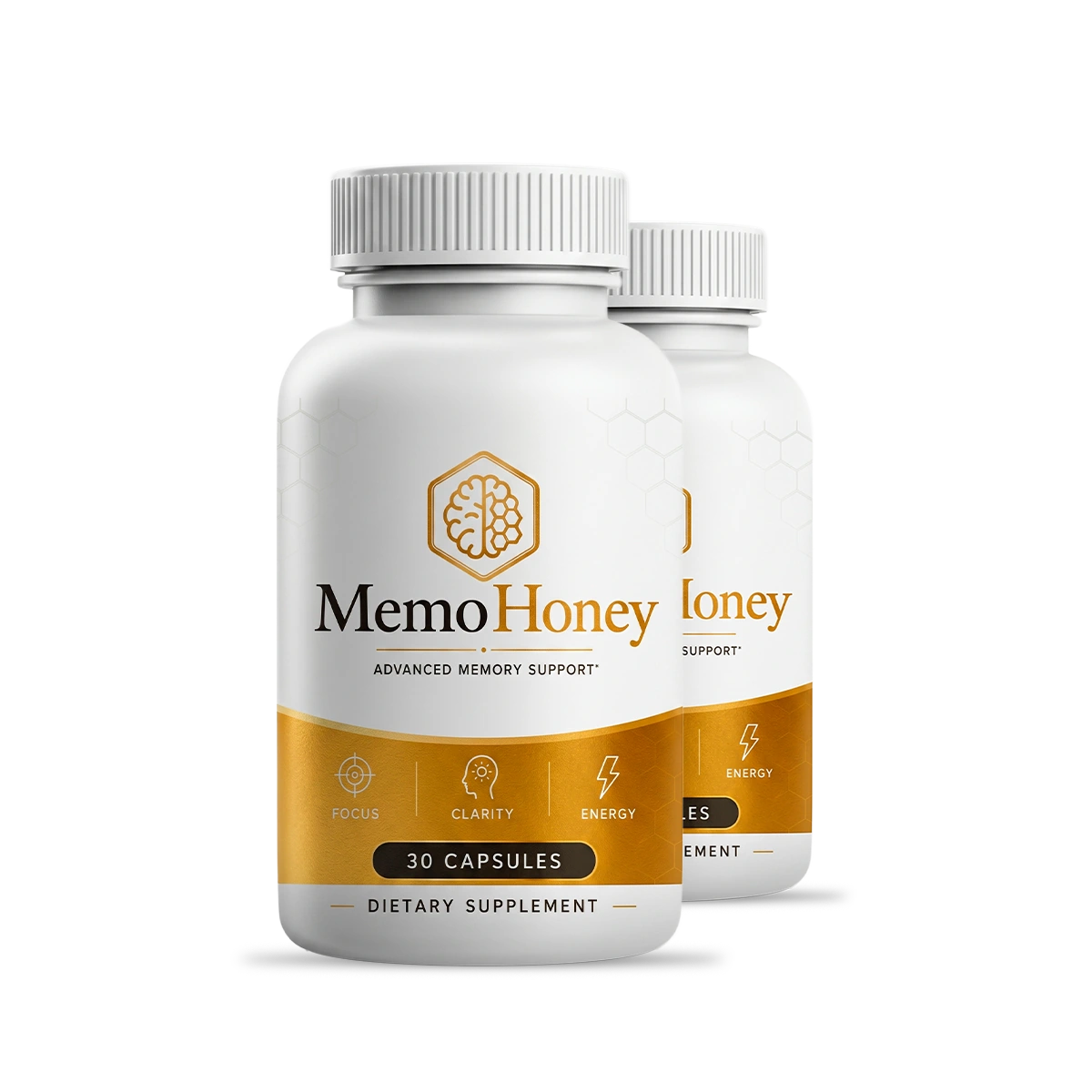
Two bottles is sixty capsules and the window is 60 days from the date you pay. The pricing page sets out which rung leaves the decision reversible.
Two bottles $158 · six bottles $294 · 60 days from purchase to change your mind
Order MemoHoney From This DeskLot MEM-26/ME-4830 · 30 capsules a bottle · dispatched inside the United States
Rule four: write day one down, and do not consult it
Record the measure on day one, then put it somewhere you will not look at it again until day forty-five.
The reason is the obvious one and it is still worth stating: memory is the thing under test, and it is a poor instrument for testing itself. A reader asked on day forty-five how sharp they felt on day one will reconstruct an answer, and the reconstruction will lean towards whatever makes the last six weeks make sense.
A note in a phone with a date on it removes the problem entirely.
Two things worth recording that are not the measure
The first is anything you noticed in the half hour after a capsule. Warmth or redness would point at niacin, tingling at beta-alanine, and both are dose-related effects normally seen far above the 7.5 mg and 40 mg this panel prints (the 2017 niacin upper-intake review, the 2017 beta-alanine meta-analysis). Noticing one is worth writing down precisely because it is not expected.
The second is anything else that changed in the six weeks. A new job, a bad fortnight of sleep, a holiday, a course of medicine. Write it in the margin rather than pretending the period was clean, because a result from a messy six weeks read as though it were clean is worse than no result.
Neither of those is the measure. Both make the measure interpretable, and together they take about ten seconds a week.
What a real result looks like
Modest. The strongest evidence anywhere in this aisle is a three-year randomised trial of a daily multivitamin that improved memory scores in older adults (the COSMOS-Web multivitamin trial), with a second trial in the same programme pointing the same way (COSMOS-Mind). That is a real finding and it is nothing like the transformation the category's advertising implies.
Anybody expecting to notice a supplement the way they notice caffeine will be disappointed by everything on this shelf, including the things that do something.
Rule five: be ready for the commonest honest answer
Which is that nothing much changed.
That is a result. It is worth having, it cost you sixty days and a telephone call, and it is exactly what the 60-day window exists for. The refund policy sets out the five steps, and the first of them is ringing the order desk with the order ID.
The failure mode worth avoiding is the slow one: deciding not to decide, letting the window close, and continuing out of inertia for another four months. Put a reminder in a calendar for day fifty. That single step is worth more than any of the measurement advice above.
A six-week log anybody can keep
Everything above fits on one sheet of paper or one note in a phone, and the whole thing takes about four minutes a week.
| When | What to write | Why |
|---|---|---|
| Day 0 | The date you paid, the measure you chose, and today's value of it | The date sets the window. The measure stops you choosing a flattering one later. |
| Every morning | A tick | The streak is the experiment. A row of ticks with three gaps in it is a different experiment from a full one. |
| End of week 2 | The measure again, and nothing else | Early enough to catch a surprise, late enough not to mean much. Do not draw a conclusion here. |
| End of week 4 | The measure, and any side effect you noticed | Flushing or tingling would point at niacin or beta-alanine (the 2017 niacin upper-intake review, the 2017 beta-alanine meta-analysis). |
| Day 45 | The measure, then read day zero for the first time | This is the comparison. Reading day zero earlier contaminates every entry after it. |
| Day 50 | The decision | Ten days of margin inside a 60-day window. Enough to make a call and act on it. |
Six entries over six weeks. The only one that requires any thought is the first.
The discipline that matters most is the fifth row. A reader who checks day zero every week is not running a six-week test, they are running six one-week tests with a drifting baseline, and the answer at the end of that is whatever they expected at the start.
The sixth row is the one that saves money. A decision made on day fifty is a decision; a decision made on day sixty-five is a conversation with no policy behind it.
The test that is bigger than this one
One last thing belongs in an article about testing a memory supplement on yourself.
If what prompted the purchase was a change you or the people around you have noticed, the six-week experiment is the wrong experiment. MedlinePlus sets out what is worth reporting, and the things with randomised evidence behind them in this area are treating hearing loss (the ACHIEVE hearing trial), treating blood pressure (SPRINT MIND) and sleep (a 2026 review of sleep and memory consolidation).
None of those three is sold on this website. All three outrank a capsule, and a reader who does them and then adds a supplement has a plan that makes sense in whichever order the results arrive.
- Yasser E, Ayache L, El Khayat H, et al, 2026, “Sleep and memory consolidation: Neural and cognitive perspectives”, Prog Brain Res 299:137-176, PMID 42547206.
- Yeung LK, Alschuler DM, Wall M, et al, 2023, “Multivitamin Supplementation Improves Memory in Older Adults: A Randomized Clinical Trial”, Am J Clin Nutr 118(1):273-282, PMID 37244291.
- Baker LD, Manson JE, Rapp SR, et al, 2023, “Effects of cocoa extract and a multivitamin on cognitive function: A randomized clinical trial”, Alzheimers Dement 19(4):1308-1319, PMID 36102337.
- Lin FR, Pike JR, Albert MS, et al, 2023, “Hearing intervention versus health education control to reduce cognitive decline in older adults with hearing loss in the USA (ACHIEVE): a multicentre, randomised controlled trial”, Lancet 402(10404):786-797, PMID 37478886.
- Williamson JD, Pajewski NM, Auchus AP, et al, 2019, “Effect of Intensive vs Standard Blood Pressure Control on Probable Dementia: A Randomized Clinical Trial”, JAMA 321(6):553-561, PMID 30688979.
- Minto C, Vecchio MG, Lamprecht M, et al, 2017, “Definition of a tolerable upper intake level of niacin: a systematic review and meta-analysis of the dose-dependent effects of nicotinamide and nicotinic acid supplementation”, Nutr Rev 75(6):471-490, PMID 28541582.
- Saunders B, Elliott-Sale K, Artioli GG, et al, 2017, “β-alanine supplementation to improve exercise capacity and performance: a systematic review and meta-analysis”, Br J Sports Med 51(8):658-669, PMID 27797728.
- “Memory”, MedlinePlus, US National Library of Medicine, medlineplus.gov.
- “Using Dietary Supplements Wisely”, National Center for Complementary and Integrative Health, National Institutes of Health, nccih.nih.gov.