MemoHoney Official Website › Articles › Reading a bottle
Reading a bottleTen emblems on a bottle, and what each one certifies
The MemoHoney artwork on this website carries ten emblem claims. They sort into four groups: three about the factory, four about the formulation, one about customer support and one that names nobody. Only the second group says anything about what is inside the capsule.
What follows is about a supplement, not about a treatment, and it is not advice from anybody qualified to give you any. If your recall has shifted enough that you or somebody close to you has remarked on it, book the appointment rather than the bottle: MedlinePlus lists what a clinician will want to hear about.
Ten emblems, one bottle
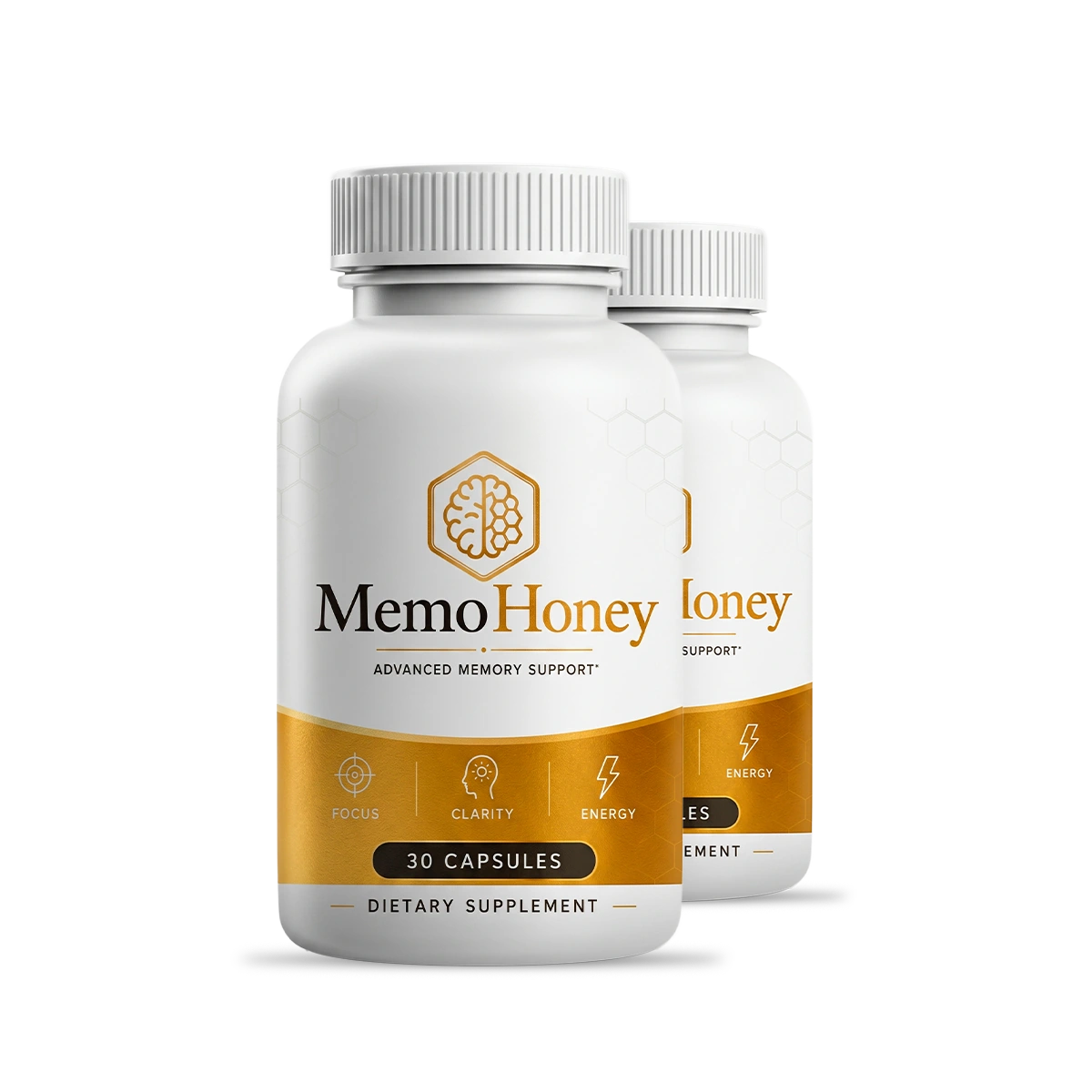
The MemoHoney artwork on this website carries ten emblem claims: made in the USA, good manufacturing practice, registered facility, non-GMO, all natural, a support guarantee, doctor formulated, gluten free, dairy free and vegetarian.
A wall of them is reassuring by design, and reassurance is not information. Each emblem is a claim about something specific, the specifics differ enormously, and three of the ten are routinely read as meaning considerably more than they do.
This article sorts them into four groups and says what each group establishes. It applies to every bottle in this aisle, not only to this one.
| Group | Which emblems | What the group is about |
|---|---|---|
| The factory | GMP, Registered Facility, Made in the USA | Where and how the bottle was filled. Nothing about what is in it. |
| The formulation | Non-GMO, Gluten Free, No Dairy, Vegetarian Friendly | What is and is not in the capsule. The most directly useful group for a buyer with a reason to care. |
| The seller | Support Guarantee | A customer-service promise drawn as a badge. The money-back terms live in the seller's policy, not in the graphic. |
| Unverifiable | Physician Formulated | No name is given anywhere, so there is nobody to check. |
Four groups. Only the second says anything about the contents of the capsule.
The factory group, and what GMP really is
Good Manufacturing Practice is the most substantive emblem on the artwork and it deserves better than being lumped in with the rest.
It is an audited judgement about how a facility runs: written procedures, cleaning between production runs, record keeping, staff training, and the ability to trace a batch backwards. A plant that holds it has been inspected against a standard by somebody, and that is a real thing rather than a graphic.
What it is not is a measurement of a bottle. GMP certifies process rather than product. It tells you a great deal about the odds that what is on the label is what is in the capsule, and nothing at all about what the label ought to have said.
Registered Facility
Every food facility shipping into the United States files a registration. It is compulsory rather than earned, it is a listing rather than an approval, and the FDA does not approve dietary supplements before sale at all (the FDA's questions and answers on dietary supplements).
This is the emblem most often read as an official endorsement, and it is the furthest from one. A registered facility is a factory the regulator knows exists.
Made in the USA
Names the country the bottle was filled in. It says nothing about where the amino acids were grown, fermented or synthesised, which for this category is frequently somewhere else entirely.
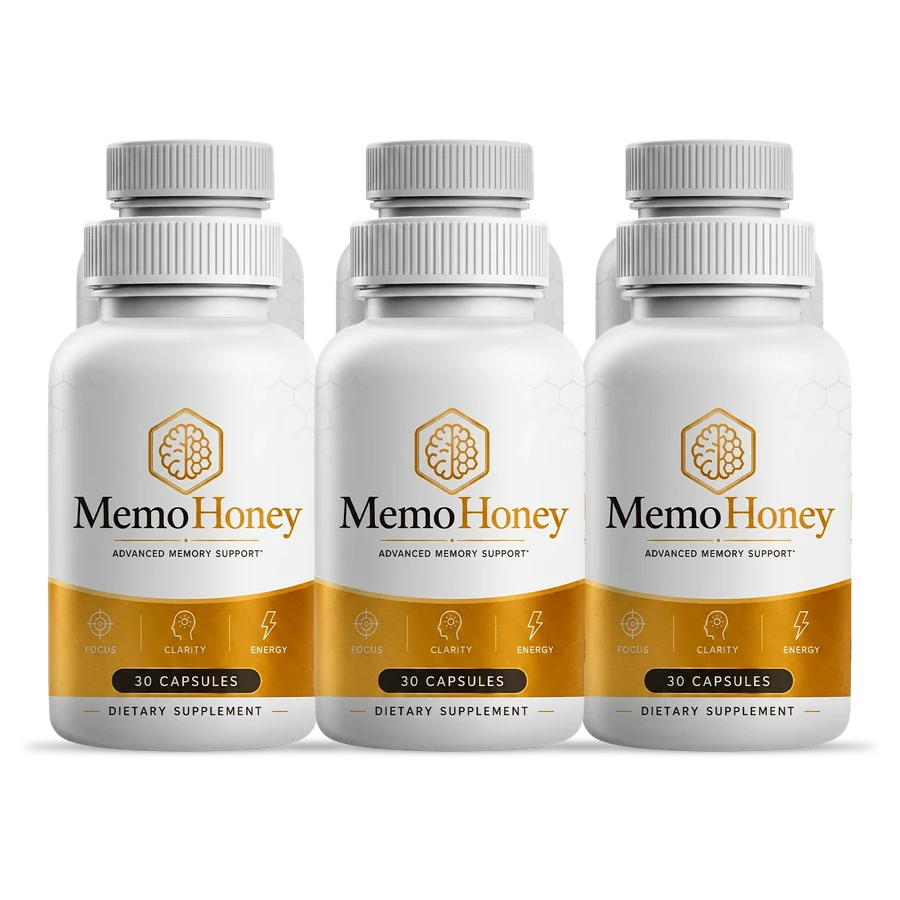
That is not a criticism. Global supply chains are the norm in supplement manufacturing and a fermentation plant is a fermentation plant. The label on this bottle is more candid than its emblem, in fact: it says manufactured in the USA with globally sourced ingredients.
The formulation group, which is the useful one
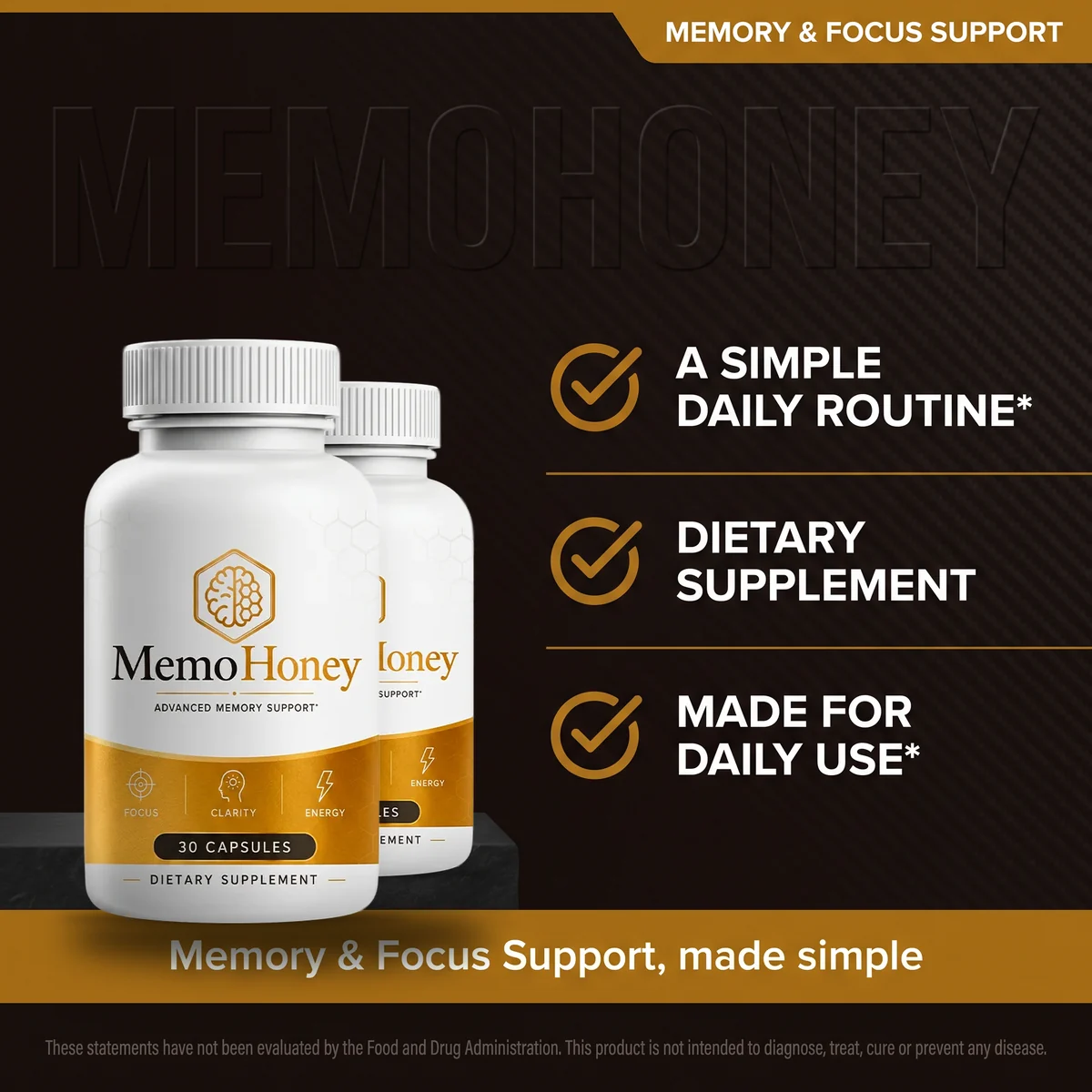
Non-GMO, gluten free, no dairy and vegetarian friendly are a different kind of statement from the rest. They are about what is and is not in the capsule, which makes them the four that matter most to a buyer with a specific reason to care.
- Vegetarian is the one of the four the label itself backs. Gelatin and plant cellulose look identical, and the panel settles it: the shell is listed as hypromellose, a vegetable capsule.
- Gluten free and no dairy describe a formulation intention. Anybody with coeliac disease or a genuine dairy allergy should write to the seller for a tested figure, because an intention and a test are different documents.
- Non-GMO is a sourcing claim about the inputs. Several of these amino acids are produced by fermentation, where the claim concerns the organism and its feedstock rather than the molecule, which is identical either way.
Every MemoHoney emblem, with what it certifies
The testing and quality page covers all ten with a caption each, and a table of what this desk can and cannot verify.
Two bottles $158 · six bottles $294 · 60 days from purchase to change your mind
Order MemoHoney From This DeskLot MEM-26/ME-4830 · 30 capsules a bottle · dispatched inside the United States
The support badge and the unverifiable one
Support Guarantee
The emblem reads 100% support guaranteed, which is a promise about customer service rather than about money. The money-back terms for this product are 60 days from the date of purchase, claims taken on the telephone, and return postage on the buyer, all of which is on the guarantee page in words rather than as a graphic.
Both are genuine commitments and both are evidence about the seller rather than about the capsule. A refund policy has never been a finding.
Physician Formulated
No physician is named, not on the label and not on the seller's page, so there is nobody for a buyer or for this desk to look up.
That does not make the emblem false, and it does make it unverifiable, which is a different thing and belongs in the same sentence as the emblem itself. It is the one badge on this bottle that could be turned into real information by a single name.
Three questions no emblem can answer
A useful way to test any badge is to ask what question it would answer if it were true in the strongest possible sense. On a supplement bottle, three questions matter more than the rest, and no emblem on any bottle answers any of them.
How much of each ingredient is in a serving?
Only a Supplement Facts panel answers this, and this bottle has one: seven lines, from 200 mg of arginine down to 7.5 mg of niacin, with no proprietary blend.
GMP raises the odds that the capsule matches the panel, which is a different statement from the panel being enough. The ingredients page takes that second question line by line.
Was this batch tested, and by whom?
A certificate of analysis answers it. A certificate reference, which is what the paperwork for this run carries, is a pointer to a document rather than the document itself, and the batch page is careful about that distinction.
No emblem on this bottle or any other is a test result. A round graphic with a tick in it cannot be, however official the typeface.
What is the capsule shell made of?
A smaller question than the other two and a real one for a good many readers. Gelatin and plant cellulose look identical in a bottle, so no emblem can settle it by itself.
Here the label does: other ingredients, hypromellose (vegetable capsule), vegetable stearate and silicon dioxide. That is the position an emblem should be in, repeating something the label already says. Anybody who needs more than that, a certification rather than a formulation, should put the question to the seller’s order desk.
Does the product do anything?
Only a trial answers this, and no trial of this capsule exists on any outcome. Emblems describe factories, formulations and refund policies, and none of those three is a finding.
Where the published record does show something on memory it belongs to other things entirely: a daily multivitamin over three years (the COSMOS-Web multivitamin trial), treating hearing loss (the ACHIEVE hearing trial) and treating blood pressure (SPRINT MIND). None of the three is sold here and none of them wears a badge.
What to do when you see a wall of emblems
- Sort them into the four groups above. It takes thirty seconds and it usually empties two of the four.
- Ignore the factory group when you are asking what is in the capsule. It answers a different question.
- Read the formulation group carefully if you have a specific reason to, and write to the seller for a tested figure if the reason is medical.
- Treat any emblem naming an unidentified expert as decoration until somebody is named.
- Then look for the thing the wall is standing in front of, which is usually the Supplement Facts panel.
On this product the panel is there, on the back of the wrap, and it says more than all ten emblems together: every amount, no blend, and a seventh ingredient the advertising leaves out. The batch page covers the one question the panel cannot answer, which is what a laboratory found in lot MEM-26/ME-4830.
The companion piece on the ingredient list does the same exercise on the other half of the packaging, and reaches a similar place: what looks like six pieces of information is frequently three.
- “Questions and Answers on Dietary Supplements”, US Food and Drug Administration, fda.gov.
- “Using Dietary Supplements Wisely”, National Center for Complementary and Integrative Health, National Institutes of Health, nccih.nih.gov.
- “Niacin: Fact Sheet for Health Professionals”, Office of Dietary Supplements, National Institutes of Health, ods.od.nih.gov.
- Yeung LK, Alschuler DM, Wall M, et al, 2023, “Multivitamin Supplementation Improves Memory in Older Adults: A Randomized Clinical Trial”, Am J Clin Nutr 118(1):273-282, PMID 37244291.
- Lin FR, Pike JR, Albert MS, et al, 2023, “Hearing intervention versus health education control to reduce cognitive decline in older adults with hearing loss in the USA (ACHIEVE): a multicentre, randomised controlled trial”, Lancet 402(10404):786-797, PMID 37478886.
- Williamson JD, Pajewski NM, Auchus AP, et al, 2019, “Effect of Intensive vs Standard Blood Pressure Control on Probable Dementia: A Randomized Clinical Trial”, JAMA 321(6):553-561, PMID 30688979.
- “Memory”, MedlinePlus, US National Library of Medicine, medlineplus.gov.