MemoHoney Official Website › Articles › Dose arithmetic
Dose arithmeticMemo Honey Nutrition Label: Twelve Grams in the Trial, 200 mg in One Capsule
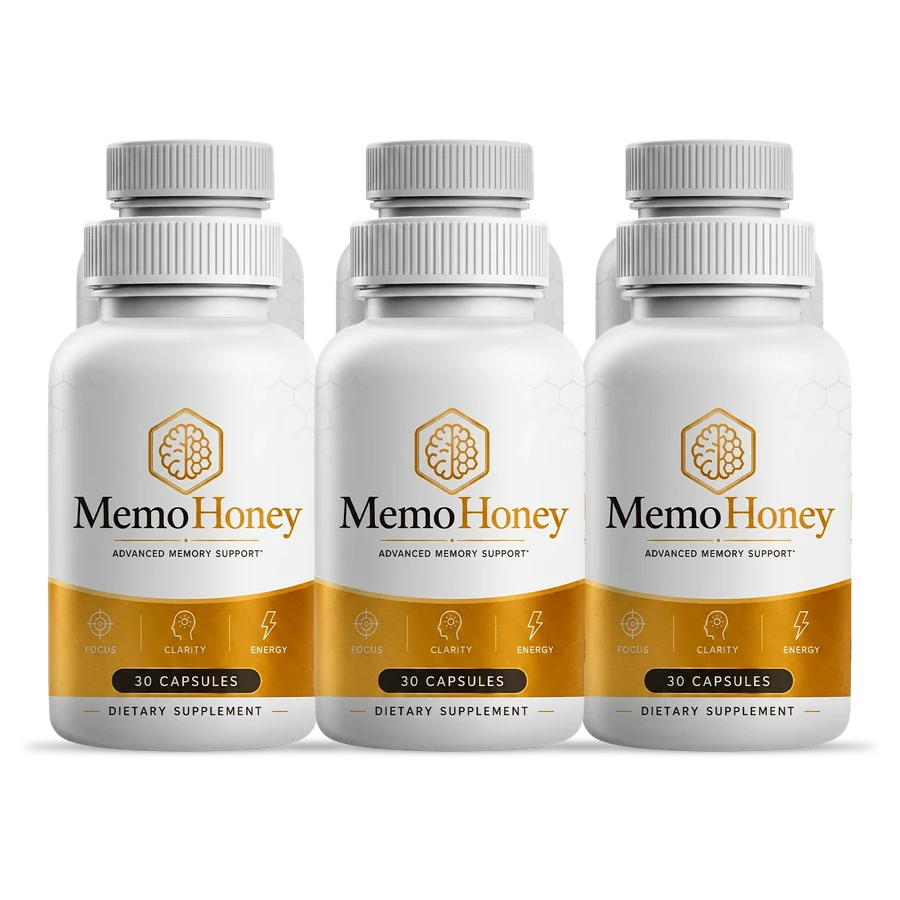
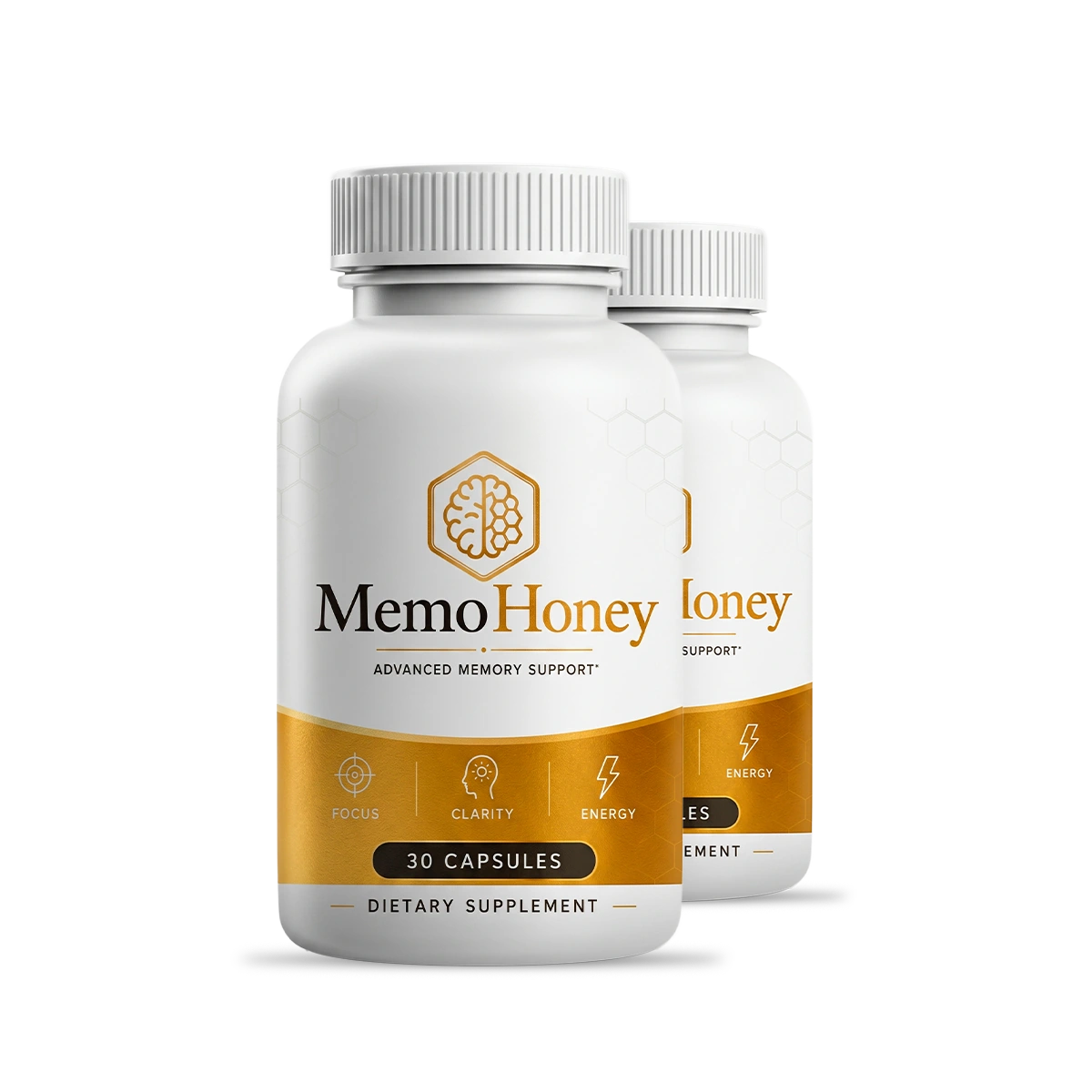
The Memo Honey nutrition label, its Supplement Facts panel, prints 640 mg of five amino acids plus 7.5 mg of niacin in each vegetable capsule, taken one a day, 30 to a bottle. One of its two largest lines, L-arginine AKG 2:1, is 200 mg. Its pharmacokinetic trial used 12 g a day, split into three doses, which is sixty times more. That gap is the clearest pattern to learn to spot across this whole category.
What follows is about a supplement, not about a treatment, and it is not advice from anybody qualified to give you any. If your recall has shifted enough that you or somebody close to you has remarked on it, book the appointment rather than the bottle: MedlinePlus lists what a clinician will want to hear about.
The number the trial used
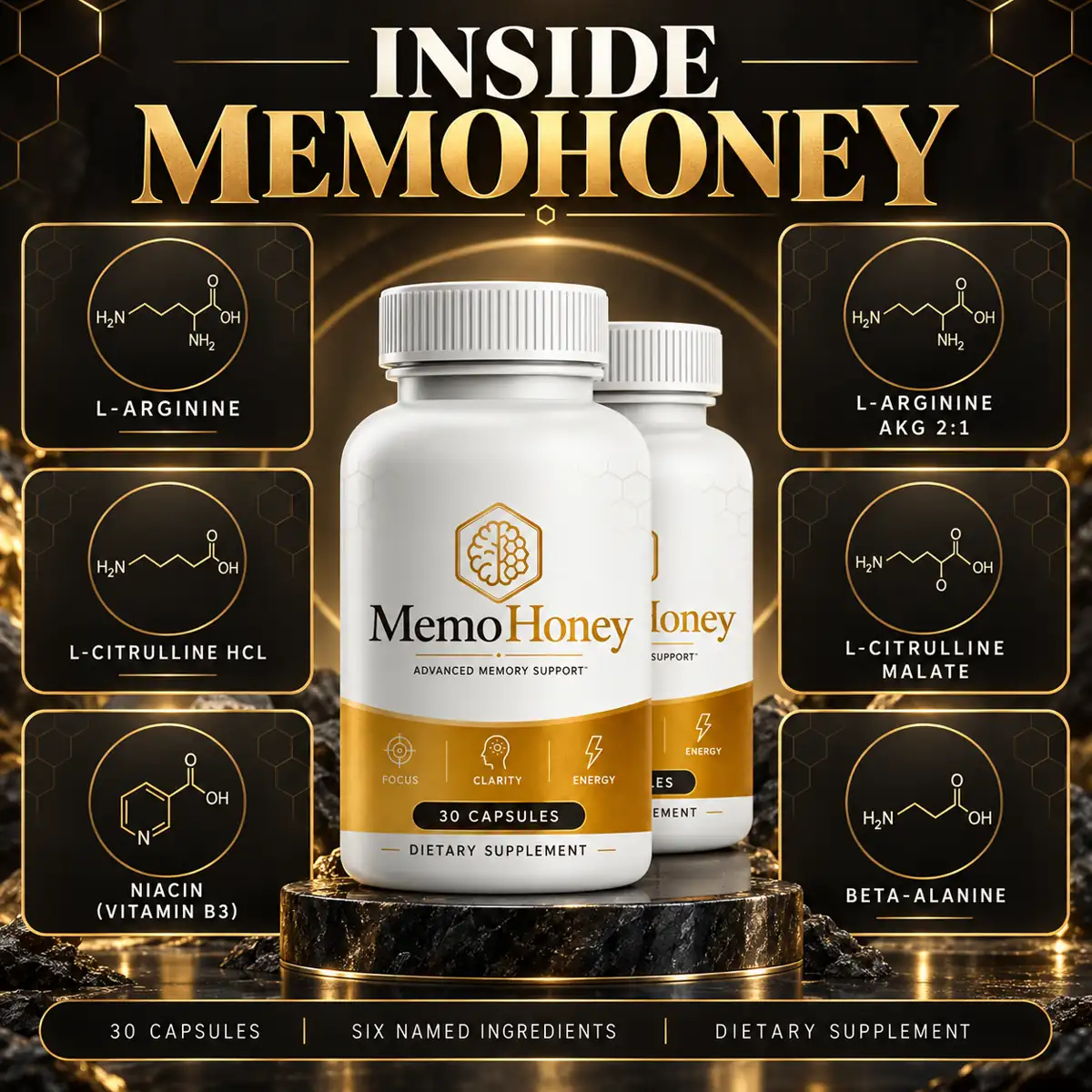
Arginine alpha-ketoglutarate in a two-to-one ratio is the second name on the MemoHoney tile graphic, and it is the ingredient with the largest trial dose on the label: twelve grams a day, against the 200 mg the Supplement Facts panel puts in a capsule. That distance is worth setting out properly, because it is the clearest example of a pattern that runs through most of this aisle.
The pharmacokinetic trial usually cited for this ingredient gave 4 g three times a day. Twelve grams in total, daily, measured for what appeared in plasma afterwards (the arginine AKG pharmacokinetic trial). A second trial gave 12 g a day for a week and looked at blood flow (a seven-day arginine AKG trial). A third, which is the one people rarely quote, gave a single 3,000 mg dose before one training session and reported nothing measurable at all (an acute arginine AKG trial).
So the field's own working amount for this ingredient sits somewhere between three grams for a single acute dose that did nothing and twelve grams a day for anything that did.
What this capsule actually holds
The panel on this bottle answers the question directly. One capsule is one serving, and its seven lines add up to 665.5 mg: 640 mg of five amino acids, 18 mg of calcium and 7.5 mg of niacin, with a vegetable capsule shell and two flow agents on top.
So the whole capsule holds about two-thirds of a gram, and no single ingredient in it reaches a quarter of a gram. That is not a criticism of this product in particular; it is the physical constraint every capsule formula in this category works inside, and it is the reason gram-scale ingredients are normally sold as powders and scoops.
Set the trial figure and the panel figure beside each other and the arithmetic is quick.
| Ingredient | What a published trial used | On the MemoHoney panel | Trial amount as a multiple |
|---|---|---|---|
| L-Arginine AKG 2:1 | 12 g a day (the arginine AKG pharmacokinetic trial) | 200 mg | 60 times |
| L-Citrulline HCl | 8.8 g a day (the citrulline cerebrovascular trial) | 100 mg | 88 times |
| L-Citrulline Malate | 8 g a day (a three-day citrulline malate trial) | 100 mg | 80 times |
| Beta-Alanine | 2.4 g a day (the beta-alanine brain-imaging trial) | 40 mg | 60 times |
| Niacin | tens of milligrams; upper limit 35 mg (the 2017 niacin upper-intake review) | 7.5 mg NE | 47% of the Daily Value |
The multiple is the trial's daily amount divided by the panel's amount in one capsule.
The last row is the interesting one and it is why niacin keeps turning up in this category. Vitamins and minerals have useful amounts measured in milligrams, so a capsule is a perfectly sensible container for them. Gram-scale amino acids are a different proposition entirely.
Whether the gap matters
There are two honest answers and they point in opposite directions, which is why this article is longer than one paragraph.
The case that it matters: every effect reported for these ingredients was reported at the amounts above. Nobody has published a trial of a sixtieth of a dose, so there is no evidence about what a sixtieth does, and the default assumption for a dose-dependent effect is that a much smaller dose does much less.
The case that it might not: the trials above measured exercise outcomes in people being asked to sprint or lift, over days rather than months. A small daily amount taken for six months is a different exposure from a large amount taken for five days, and nobody has studied that either. The absence of evidence runs in both directions.
What is not honest is to quote the trial and sell the capsule as though the trial's result travelled with it. That is the move this article exists to name, and it is common enough in this aisle to be worth recognising on sight.
Read the MemoHoney label analysis
The comparison above is set out ingredient by ingredient on the ingredients page, with the population and the outcome attached to every figure.
Two bottles $158 · six bottles $294 · 60 days from purchase to change your mind
Order MemoHoney From This DeskLot MEM-26/ME-4830 · 30 capsules a bottle · dispatched inside the United States
How to spot the move in any product page
Once you know what you are looking at, the pattern is visible in about ten seconds on most pages in this category.
- A trial is described at length and the amount it used is not mentioned. If the dose is missing from the sentence, that is usually why.
- The product's own amount is missing too, either because there is no panel or because the ingredient sits inside a proprietary blend.
- The mechanism gets three paragraphs and the result gets one clause.
- The word clinically studied attaches to the ingredient rather than to the product, which is a true statement that means much less than it sounds.
- The comparison is to a trial in a completely different population: athletes, usually, because that is where these particular ingredients were tested.
None of those five is fraud. Each one is a true sentence arranged to carry more weight than it can bear, and the defence against all five is the same: ask what amount the trial used and what amount the capsule holds, and notice when one of the two answers is missing.
What an honest version of this claim looks like
It would read something like: this formula contains arginine AKG, an ingredient whose published trials used 12 g a day in resistance-trained adults and measured plasma amino acids rather than memory. Our capsule contains X mg. We have not tested the finished product.
That is three sentences, it is entirely truthful, and no product in this category writes it, because the third sentence is a hard thing to print next to a price.
On this product all three can be written, because the label prints the second: the capsule contains 200 mg, one sixtieth of the trial amount, and nobody has tested the finished product. The ingredients page writes the same three sentences for every line of the panel.
What this does not mean
It does not mean the formula is inert. A small amount of something is not nothing, and the blood-flow mechanism behind four of these six names is real biochemistry rather than marketing (a stable-isotope study of dietary arginine, a human citrulline availability study).
It means the honest description is a plausible mechanism at a small dose. Whether that is worth $79 a bottle is a judgement, and it is a better judgement when the arithmetic above is in front of you.
Two formats where the arithmetic comes out differently
The capsule constraint is not a law of supplements. It is a property of one container, and two other formats escape it in ways worth understanding, because between them they explain most of this aisle.
The scoop
Gram-scale ingredients are normally sold as powders. A scoop holds five or ten grams without difficulty, which is why every trial quoted above was able to give people amounts a capsule cannot carry, and why sports nutrition sells citrulline in tubs rather than in bottles of thirty.
The trade is obvious the first time you use one. A powder has to be measured, mixed and swallowed, it tastes of what it is, and adherence over six weeks is measurably worse than a capsule you can take with a glass of water in four seconds.
So the format decision is a real one rather than a trick: a capsule at a fraction of the trial dose that somebody actually takes every morning may beat a tub at the full dose that stops being used in week two. Nobody has tested that proposition either, and it is at least an honest argument.
The vitamin
Vitamins and minerals have useful amounts measured in milligrams or micrograms, so a capsule is a perfectly sized container for them. Niacin's tolerable upper intake level is 35 mg a day (the 2017 niacin upper-intake review), and this capsule carries 7.5 mg NE, which is 47% of the Daily Value.
That is why the strongest evidence in this aisle belongs to a multivitamin. The three-year randomised trial that improved memory scores in older adults (the COSMOS-Web multivitamin trial) was testing a product whose ingredients all fit comfortably in their container, with amounts printed on a panel, at prices nobody markets.
The general rule falls out of the two sections above. When an ingredient's trial dose is measured in milligrams, a capsule is the right format and the amount on the panel can be compared directly against the literature. When it is measured in grams, a capsule is a compromise, and the panel tells you the size of it: on this label, sixty to eighty-eight to one.
What to do with this, as a buyer
- Read the Supplement Facts panel before the front label. For this product it is printed on the bottle wrap and quoted line by line on the ingredients page.
- Compare each amino-acid line against the table above. You will know more about the product in five minutes than the packaging can tell you.
- Where a product prints no panel at all, treat its potency claims as unverified and decide whether the rest of the offer still works for you.
- Either way, use the 60-day window as what it is: the thing that makes the decision reversible. It runs from the date of purchase.
- And keep the arithmetic for the next product you look at, because this one is not unusual in the aisle. It is simply one where the numbers are easy to check.
The companion piece on how these six names group takes the same label from a different angle: not how much of each is present, but how many separate ideas the formula actually contains.
- Campbell B, Roberts M, Kerksick C, et al, 2006, “Pharmacokinetics, safety, and effects on exercise performance of L-arginine alpha-ketoglutarate in trained adult men”, Nutrition 22(9):872-81, PMID 16928472.
- Wax B, Kavazis AN, Webb HE, et al, 2012, “Acute L-arginine alpha ketoglutarate supplementation fails to improve muscular performance in resistance trained and untrained men”, J Int Soc Sports Nutr 9(1):17, PMID 22510253.
- Willoughby DS, Boucher T, Reid J, et al, 2011, “Effects of 7 days of arginine-alpha-ketoglutarate supplementation on blood flow, plasma L-arginine, nitric oxide metabolites, and asymmetric dimethyl arginine after resistance exercise”, Int J Sport Nutr Exerc Metab 21(4):291-9, PMID 21813912.
- Li A, Li H, Chen J, 2025, “The effects of L-citrulline supplementation on cerebrovascular function during sprint interval training in taekwondo athletes”, J Exerc Sci Fit 23(3):222-228, PMID 40474881.
- Faria VS, Egan B, 2024, “Effects of 3 days of citrulline malate supplementation on short-duration repeated sprint running performance in male team sport athletes”, Eur J Sport Sci 24(6):758-765, PMID 38874989.
- Ostfeld I, Zamir A, Ben-Zeev T, et al, 2024, “β-Alanine supplementation improves fractional anisotropy scores in the hippocampus and amygdala in 60-80-year-old men and women”, Exp Gerontol 194:112513, PMID 38971131.
- Minto C, Vecchio MG, Lamprecht M, et al, 2017, “Definition of a tolerable upper intake level of niacin: a systematic review and meta-analysis of the dose-dependent effects of nicotinamide and nicotinic acid supplementation”, Nutr Rev 75(6):471-490, PMID 28541582.
- Mariotti F, Petzke KJ, Bonnet D, et al, 2013, “Kinetics of the utilization of dietary arginine for nitric oxide and urea synthesis: insight into the arginine-nitric oxide metabolic system in humans”, Am J Clin Nutr 97(5):972-9, PMID 23535108.
- Rougé C, Des Robert C, Robins A, et al, 2007, “Manipulation of citrulline availability in humans”, Am J Physiol Gastrointest Liver Physiol 293(5):G1061-7, PMID 17901164.
- Yeung LK, Alschuler DM, Wall M, et al, 2023, “Multivitamin Supplementation Improves Memory in Older Adults: A Randomized Clinical Trial”, Am J Clin Nutr 118(1):273-282, PMID 37244291.
- “Memory”, MedlinePlus, US National Library of Medicine, medlineplus.gov.