MemoHoney Official Website › Memory Supplement Guide
Memory Supplement GuideA memory supplement guide for people who want the honest version
Most of this category rests on mechanism rather than on measurement. A few things have randomised evidence: a daily multivitamin, treating hearing loss, treating blood pressure and sleep. Most single ingredients do not, and the difference between those two groups is the most useful thing a shopper can learn.
Written for anybody in this aisle, including somebody who will buy a different product at the end of it.
What the category actually contains
| Group | Typical ingredients | What the published record looks like |
|---|---|---|
| Botanicals | Ginkgo, bacopa, huperzine, panax ginseng | The largest prevention trial of ginkgo in older adults did not reduce dementia incidence (the Ginkgo Evaluation of Memory study). Others have smaller and mixed literatures. |
| B vitamins | B6, B9, B12, niacin | Deficiency correction is well established. Supplementation in people who are not deficient has been tested and the results are not encouraging (a 2025 observational analysis of B vitamin intake). |
| Blood-flow amino acids | Arginine, citrulline, arginine AKG | Real trials at gram amounts, almost all in exercise research. One trial measured blood flow to the brain, in athletes sprinting (the citrulline cerebrovascular trial). |
| Buffers and dipeptides | Beta-alanine, carnosine | One small imaging trial in older adults at 2.4 g a day (the beta-alanine brain-imaging trial); a sports meta-analysis with a pooled effect size of 0.18 (the 2017 beta-alanine meta-analysis). |
| Multivitamins | Everything, at RDA-ish amounts | The strongest evidence in the aisle: a three-year randomised trial improved memory scores in older adults (the COSMOS-Web multivitamin trial), with a second trial in the same programme pointing the same way (COSMOS-Mind). |
Grouped by what the research looks like rather than by what the packaging claims.
The row most people find surprising is the last one. The cheapest and least fashionable product on the shelf has the best evidence in the aisle, and it is the one nobody markets as a memory supplement because there is no margin in it.
The row above it is where a good deal of the current category sits, including the product this website sells. Real trials, real amounts, in a field that is not memory.
The four things with randomised evidence that do not come in a bottle
Treating hearing loss
A randomised trial in older adults at higher risk found hearing treatment slowed cognitive change over three years (the ACHIEVE hearing trial). It is the strongest single result in this whole area and it involves an audiologist rather than a capsule.
Treating blood pressure to a lower target
Intensive control reduced probable dementia in a large randomised trial (SPRINT MIND). Most people who need it already know they do, and it is generally covered by ordinary care.
Sleep
Memory consolidation during sleep is one of the better-established findings in cognitive neuroscience (a 2026 review of sleep and memory consolidation). It costs nothing and almost nobody sells it.
Movement and everything it carries with it
Exercise acts on blood pressure, sleep and mood at once, which is why it is difficult to study cleanly and easy to recommend. It is also where most of the amino acids in this aisle were actually tested.
Listing them on a website that sells a capsule is deliberate. A reader who does all four and adds a supplement has a defensible plan. A reader who buys a supplement instead has spent money to avoid the parts that work.
Why mechanism is not measurement
Almost every product in this aisle has a mechanism, and most of the mechanisms are real. Nitric oxide really does relax blood vessels. NAD really is required for metabolism. Carnosine really is present in brain tissue.
A mechanism tells you why something might work. It does not tell you whether it does, at what amount, in whom, or by how much, and the history of medicine is largely a list of excellent mechanisms that failed when somebody finally measured them.
The niacin story on this label is a good illustration in both directions. Severe deficiency causes a dementia, the observational data associate higher dietary intake with lower risk (the Chicago Health and Aging Project analysis), and high-dose niacin as a cardiovascular drug was tested properly and the trial was stopped for harm (the HPS2-THRIVE trial). Same nutrient, three different questions, three different answers.
The practical rule for a shopper: when a page describes a mechanism at length and a result briefly or not at all, the mechanism is doing the selling.
The dose question, which decides almost everything
A capsule is a small container. The product this website sells fits 665.5 mg of listed ingredients into one, by its own panel, and that total is shared across every ingredient in the formula, with the flow agents that get the powder through a filling machine on top.
Set that against the amounts in the published trials of the ingredients this aisle uses: 12 g a day of arginine AKG, 8.8 g of citrulline HCl, 2.4 g of beta-alanine, 2 g of carnosine. One of those does not fit in a capsule, let alone four of them together.
Which is why a formula's ingredient count is a poor guide to its strength and often an inverse one. Six names in one capsule means six small fractions; two names might mean two meaningful ones. The panel is where you find out which you have: on the product this website sells it shows five amino acids sharing 640 mg, each between 40 and 200 mg.
Niacin is the honourable exception and worth understanding as the pattern to look for. Its useful amount is milligrams and the US upper limit is 35 mg a day (the 2017 niacin upper-intake review), so a capsule can carry a real dose of it comfortably. Vitamins and minerals generally can. Gram-scale amino acids generally cannot.
What a good outcome from a memory supplement looks like
Modest, slow and hard to attribute. The multivitamin trial that is the strongest result in this aisle reported an improvement in memory scores over three years (the COSMOS-Web multivitamin trial), which is a real finding and is nothing like the transformation the category's advertising implies.
A reader who expects to notice a supplement working the way they notice caffeine working will be disappointed by everything in this aisle, including the products that do something.
The honest framing is that these are small additions with long horizons, judged over months, on top of the things that actually move the needle. Anyone selling you a different framing is selling you the framing rather than the product.
And if what prompted the shopping trip was a change somebody has noticed, the first step is not this aisle at all. MedlinePlus sets out what is worth reporting.
Sources behind this guide
- DeKosky ST, Williamson JD, Fitzpatrick AL, et al. Ginkgo biloba for prevention of dementia: a randomized controlled trial. JAMA. 2008;300(19):2253-62. PMID 19017911. https://pubmed.ncbi.nlm.nih.gov/19017911/
- Chen Q, Huang J, Shi X, et al. Associations between dietary B vitamin intakes and cognitive function among elderly individuals: An observational study. Nutrition. 2025;134:112716. PMID 40056822. https://pubmed.ncbi.nlm.nih.gov/40056822/
- Li A, Li H, Chen J. The effects of L-citrulline supplementation on cerebrovascular function during sprint interval training in taekwondo athletes. J Exerc Sci Fit. 2025;23(3):222-228. PMID 40474881. https://pubmed.ncbi.nlm.nih.gov/40474881/
- Ostfeld I, Zamir A, Ben-Zeev T, et al. β-Alanine supplementation improves fractional anisotropy scores in the hippocampus and amygdala in 60-80-year-old men and women. Exp Gerontol. 2024;194:112513. PMID 38971131. https://pubmed.ncbi.nlm.nih.gov/38971131/
- Saunders B, Elliott-Sale K, Artioli GG, et al. β-alanine supplementation to improve exercise capacity and performance: a systematic review and meta-analysis. Br J Sports Med. 2017;51(8):658-669. PMID 27797728. https://pubmed.ncbi.nlm.nih.gov/27797728/
- Yeung LK, Alschuler DM, Wall M, et al. Multivitamin Supplementation Improves Memory in Older Adults: A Randomized Clinical Trial. Am J Clin Nutr. 2023;118(1):273-282. PMID 37244291. https://pubmed.ncbi.nlm.nih.gov/37244291/
- Baker LD, Manson JE, Rapp SR, et al. Effects of cocoa extract and a multivitamin on cognitive function: A randomized clinical trial. Alzheimers Dement. 2023;19(4):1308-1319. PMID 36102337. https://pubmed.ncbi.nlm.nih.gov/36102337/
- Lin FR, Pike JR, Albert MS, et al. Hearing intervention versus health education control to reduce cognitive decline in older adults with hearing loss in the USA (ACHIEVE): a multicentre, randomised controlled trial. Lancet. 2023;402(10404):786-797. PMID 37478886. https://pubmed.ncbi.nlm.nih.gov/37478886/
- Williamson JD, Pajewski NM, Auchus AP, et al. Effect of Intensive vs Standard Blood Pressure Control on Probable Dementia: A Randomized Clinical Trial. JAMA. 2019;321(6):553-561. PMID 30688979. https://pubmed.ncbi.nlm.nih.gov/30688979/
- Yasser E, Ayache L, El Khayat H, et al. Sleep and memory consolidation: Neural and cognitive perspectives. Prog Brain Res. 2026;299:137-176. PMID 42547206. https://pubmed.ncbi.nlm.nih.gov/42547206/
- Morris MC, Evans DA, Bienias JL, et al. Dietary niacin and the risk of incident Alzheimer's disease and of cognitive decline. J Neurol Neurosurg Psychiatry. 2004;75(8):1093-9. PMID 15258207. https://pubmed.ncbi.nlm.nih.gov/15258207/
- Landray MJ, Haynes R, Hopewell JC, et al. Effects of extended-release niacin with laropiprant in high-risk patients. N Engl J Med. 2014;371(3):203-12. PMID 25014686. https://pubmed.ncbi.nlm.nih.gov/25014686/
- Minto C, Vecchio MG, Lamprecht M, et al. Definition of a tolerable upper intake level of niacin: a systematic review and meta-analysis of the dose-dependent effects of nicotinamide and nicotinic acid supplementation. Nutr Rev. 2017;75(6):471-490. PMID 28541582. https://pubmed.ncbi.nlm.nih.gov/28541582/
- Memory. MedlinePlus, U.S. National Library of Medicine. https://medlineplus.gov/memory.html
- Using Dietary Supplements Wisely. National Center for Complementary and Integrative Health, National Institutes of Health. https://www.nccih.nih.gov/health/using-dietary-supplements-wisely
Where MemoHoney sits in all of this
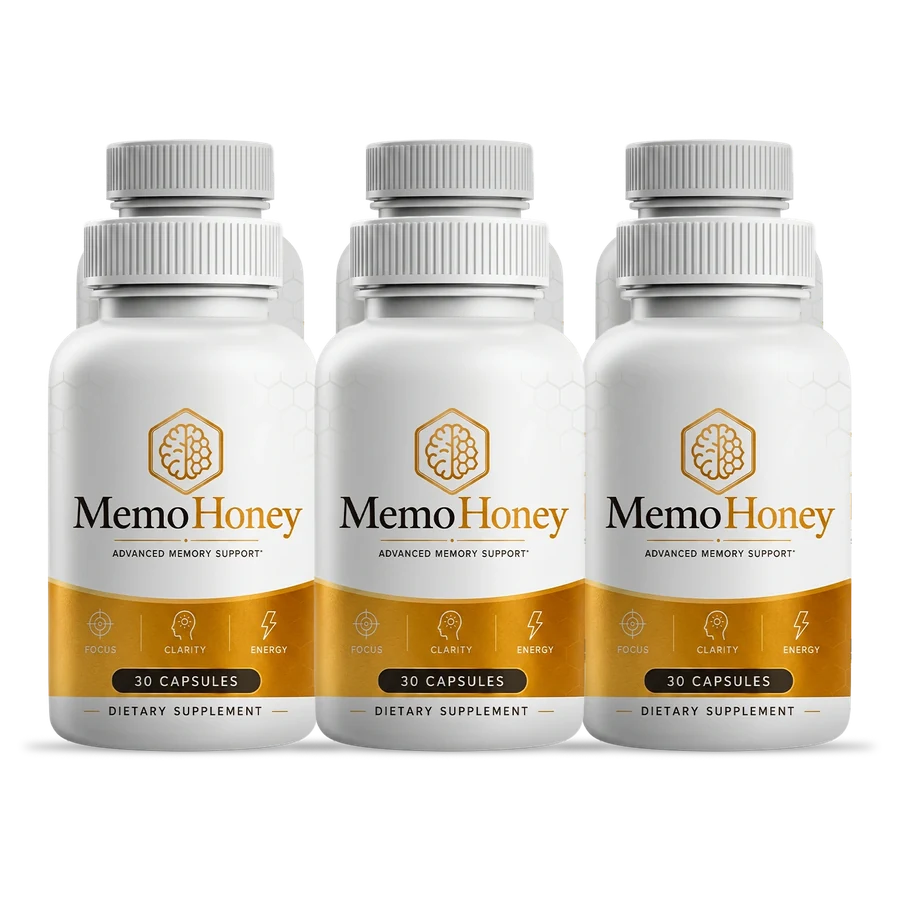
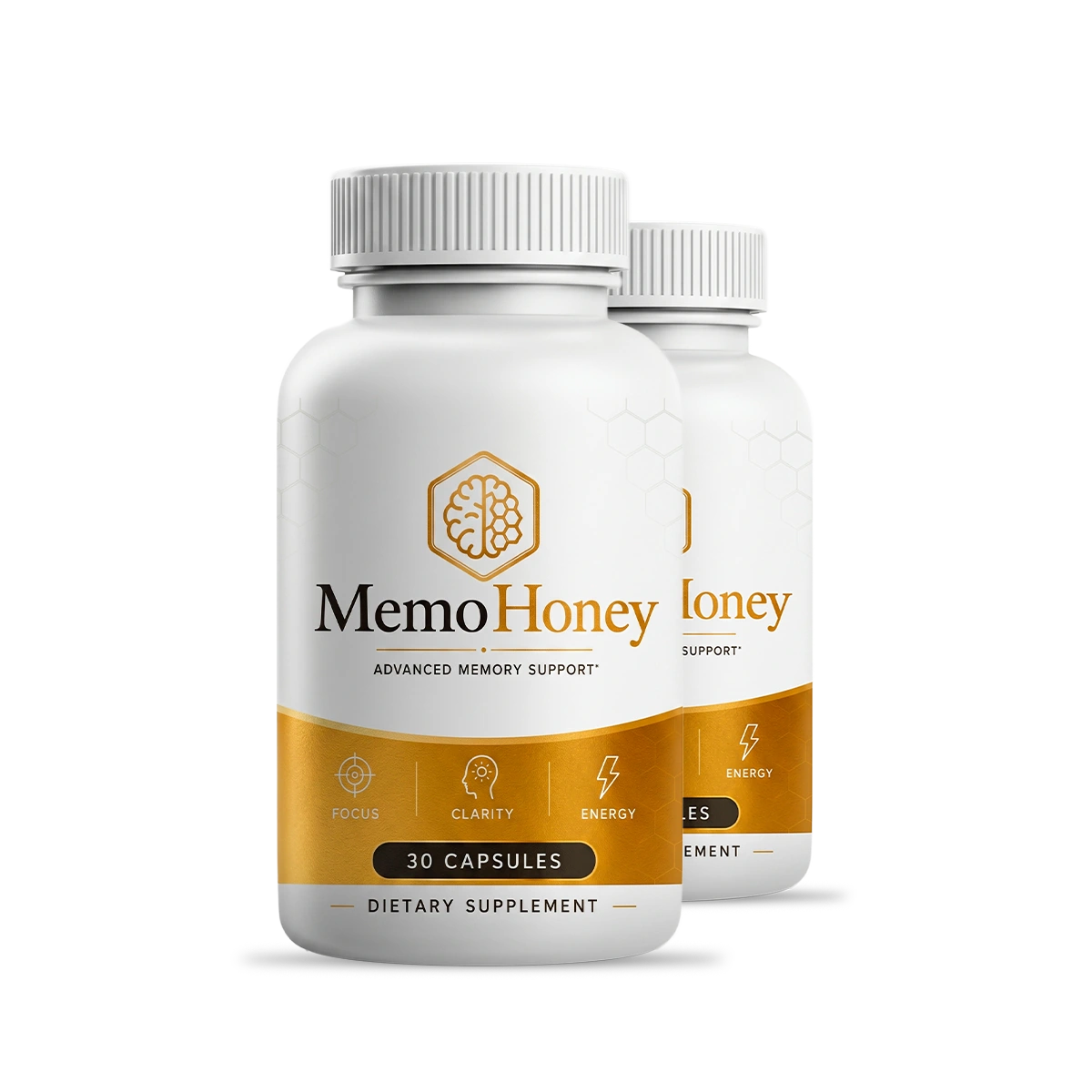
A six-name blood-flow formula with a B vitamin, sold as one morning capsule, with no trial of its own and a sixty-day window from the date you pay. The label analysis on this website says the rest.
Two bottles $158 · six bottles $294 · 60 days from purchase to change your mind
Order MemoHoney From This DeskLot MEM-26/ME-4830 · 30 capsules a bottle · dispatched inside the United States